
Date of travel: 03rd June, 2026
Skopje, the capital of North Macedonia, is not a city you “see.” It is a city you feel confused by, fall in love with, and then try to explain to your friends later. In 48 hours you get both Skopjes: the Ottoman soul and the marble-fantasy capital.
Short History:
Skopje sits on the Vardar River, so everyone wanted it: Romans, Byzantines, Ottomans, Serbs, Bulgarians, Yugoslavs. Founded as Scupi around 1st century AD, It was a Roman colony and later an early Christian center. You can still see ruins 5km north of today’s center at the Archaeological Site of Skupi.
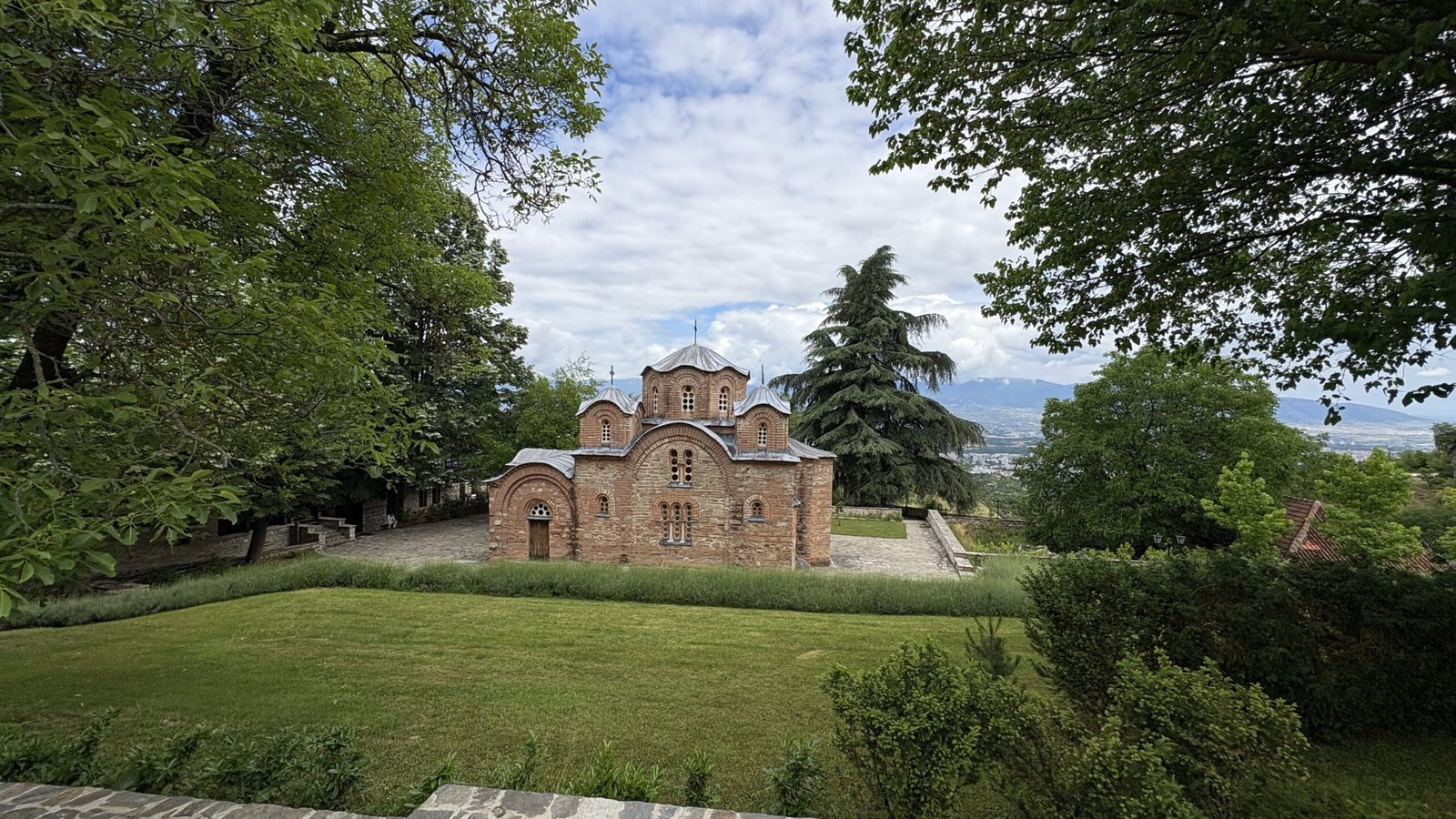
It became part of the First Bulgarian Empire, then Byzantine, then the capital of Serbian Emperor Stefan Dušan in the 1300s. This is when a lot of Orthodox monasteries around the city were built.
Ottoman: 500 years
1392-1912. This is where Skopje’s soul comes from.
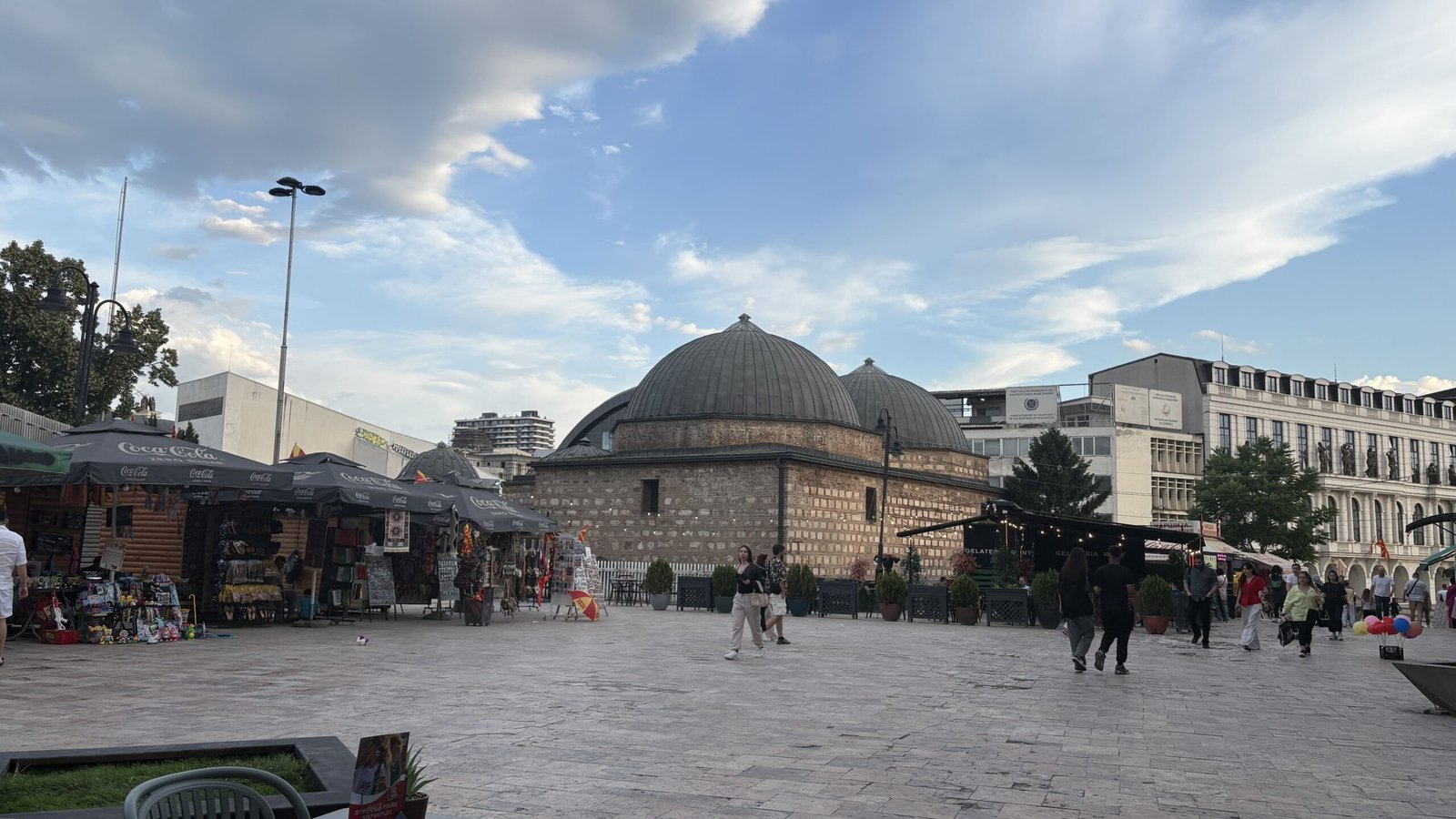
They built the Stone Bridge, Old Bazaar, Čifte Hammam, Mustafa Pasha Mosque, and Daut Pasha Hammam. The Old Bazaar became the biggest in the Balkans outside Istanbul. It was a real multicultural trade city.
20th Century: Border city chaos
1912: Joined Serbia.
1918: Part of Yugoslavia.
1941-1944: Occupied by Bulgaria.
1945: Became capital of the Socialist Republic of Macedonia inside Yugoslavia.
1963 Earthquake: The reset
July 26, 1963. 6.1 magnitude. 80% of the city destroyed. 1000+ people died.
The world helped rebuild. Japanese architect Kenzo Tange designed the new masterplan.
1991: Independence
Macedonia became an independent country when Yugoslavia broke up. Peaceful, but economically tough.
2014: The marble makeover
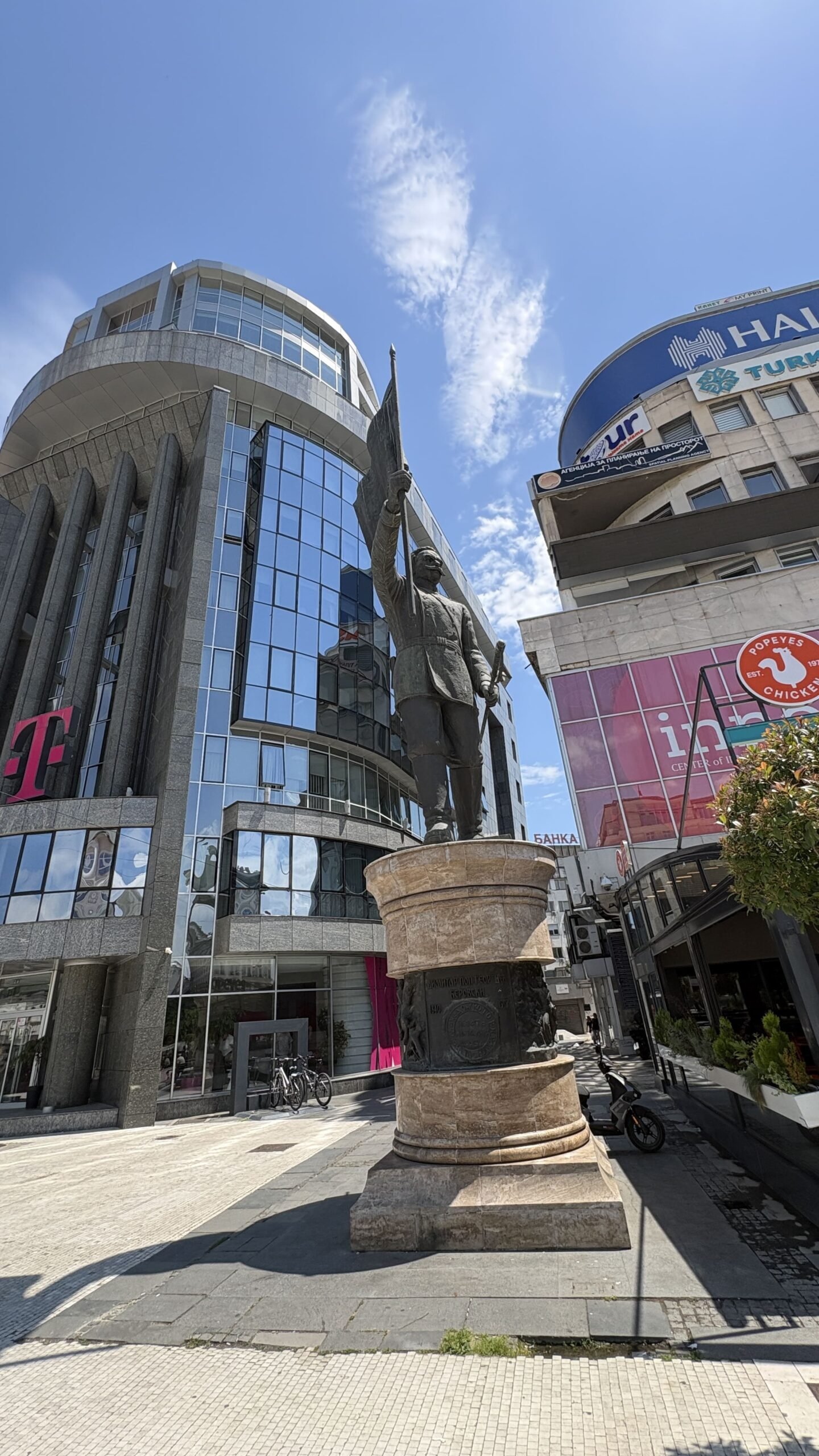
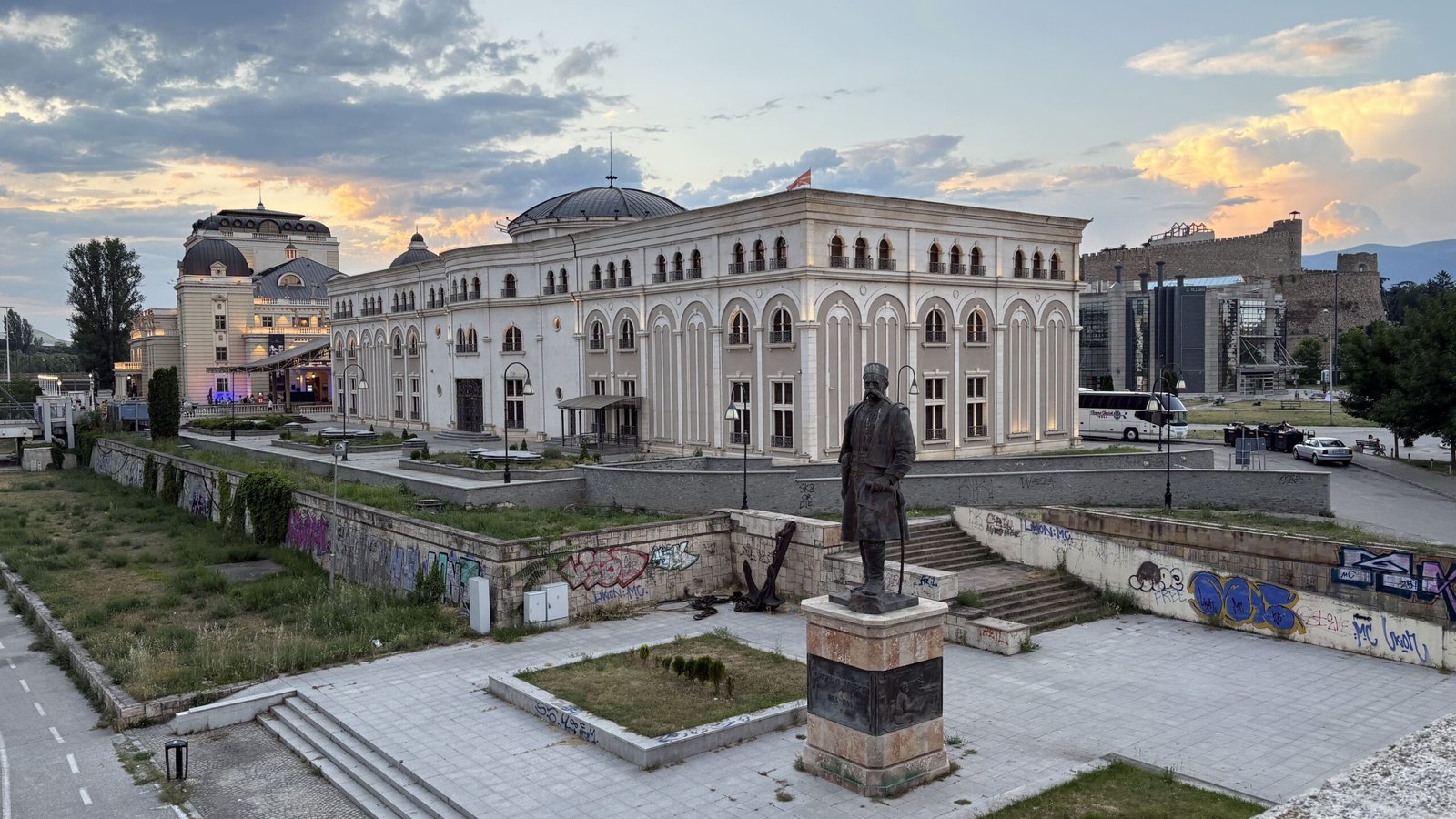
The “Skopje 2014” project added 200+ statues, neoclassical facades, and triumphal arches to create a new national narrative. Love it or hate it, it completely changed the city center’s look.
2019: The Name Drama: The country was “Macedonia” until 2019, then became “North Macedonia” after the deal with Greece.
Time- Line:
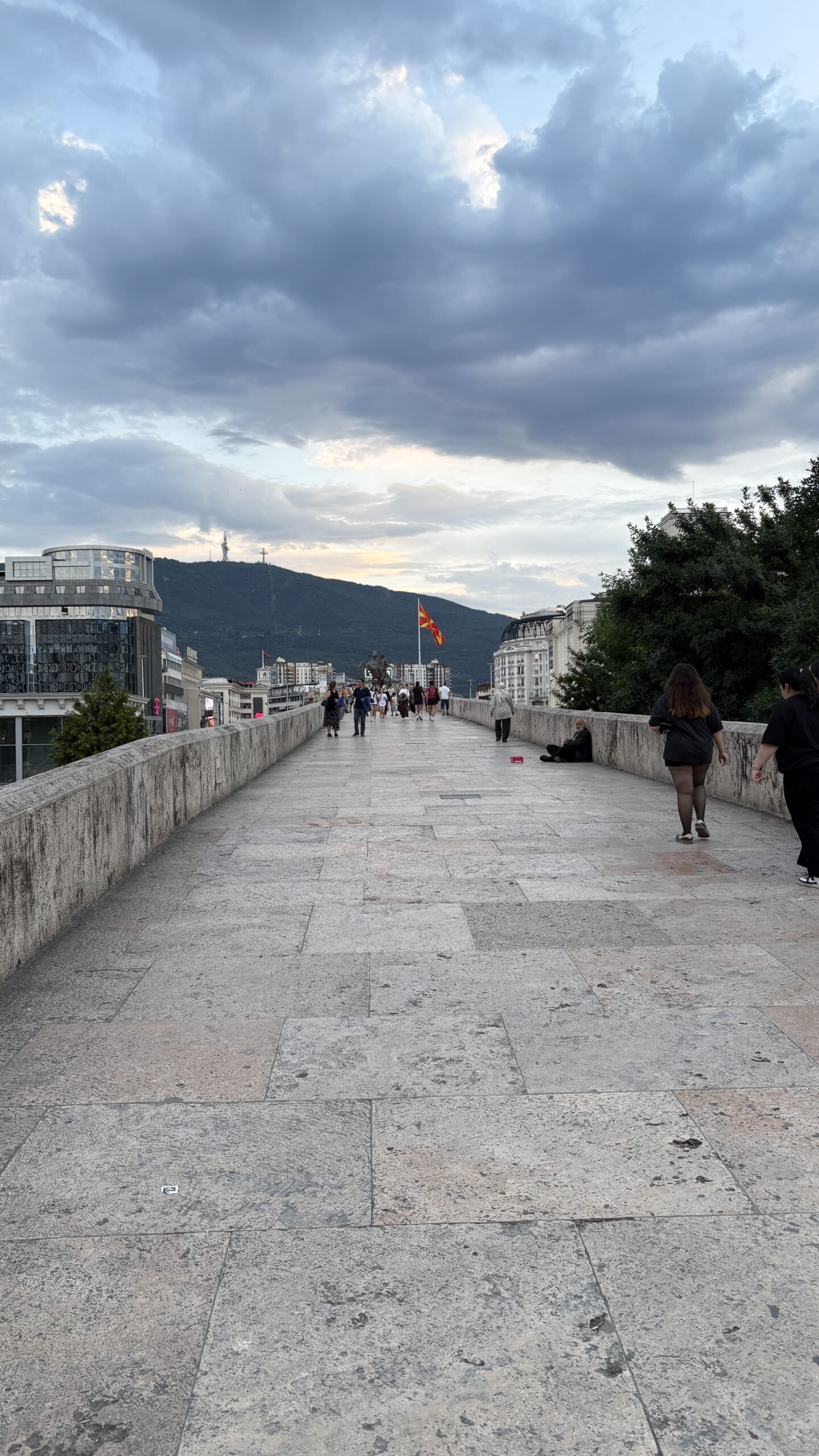
Walk across the Stone Bridge and as you travel you can still see 3 layers of the city.
- Ottoman side: Old Bazaar, mosques, cobblestones, Turkish coffee
- Yugoslav side: Post-1963 concrete, Railway Station Museum with clock frozen at 5:17am
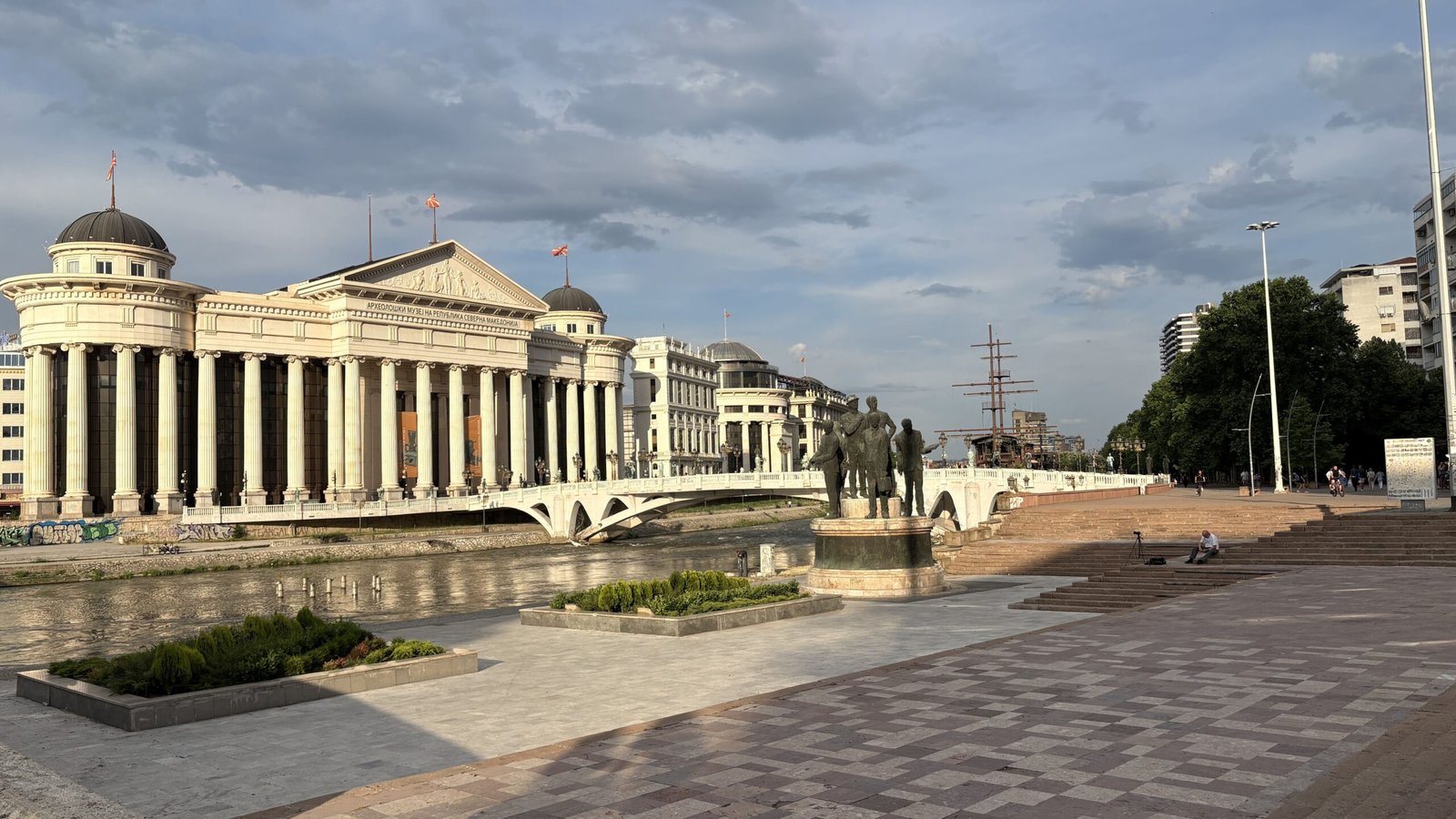
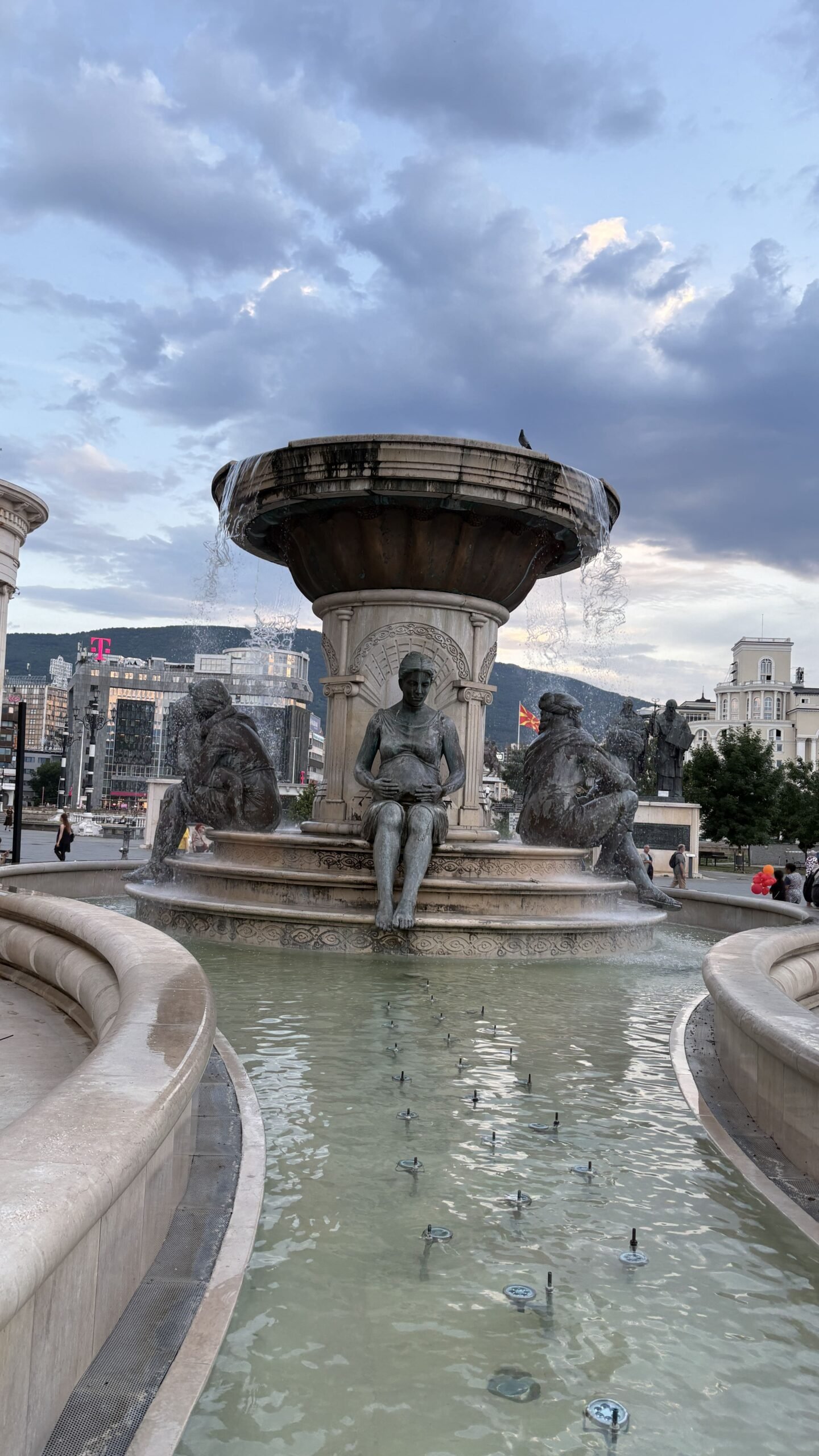
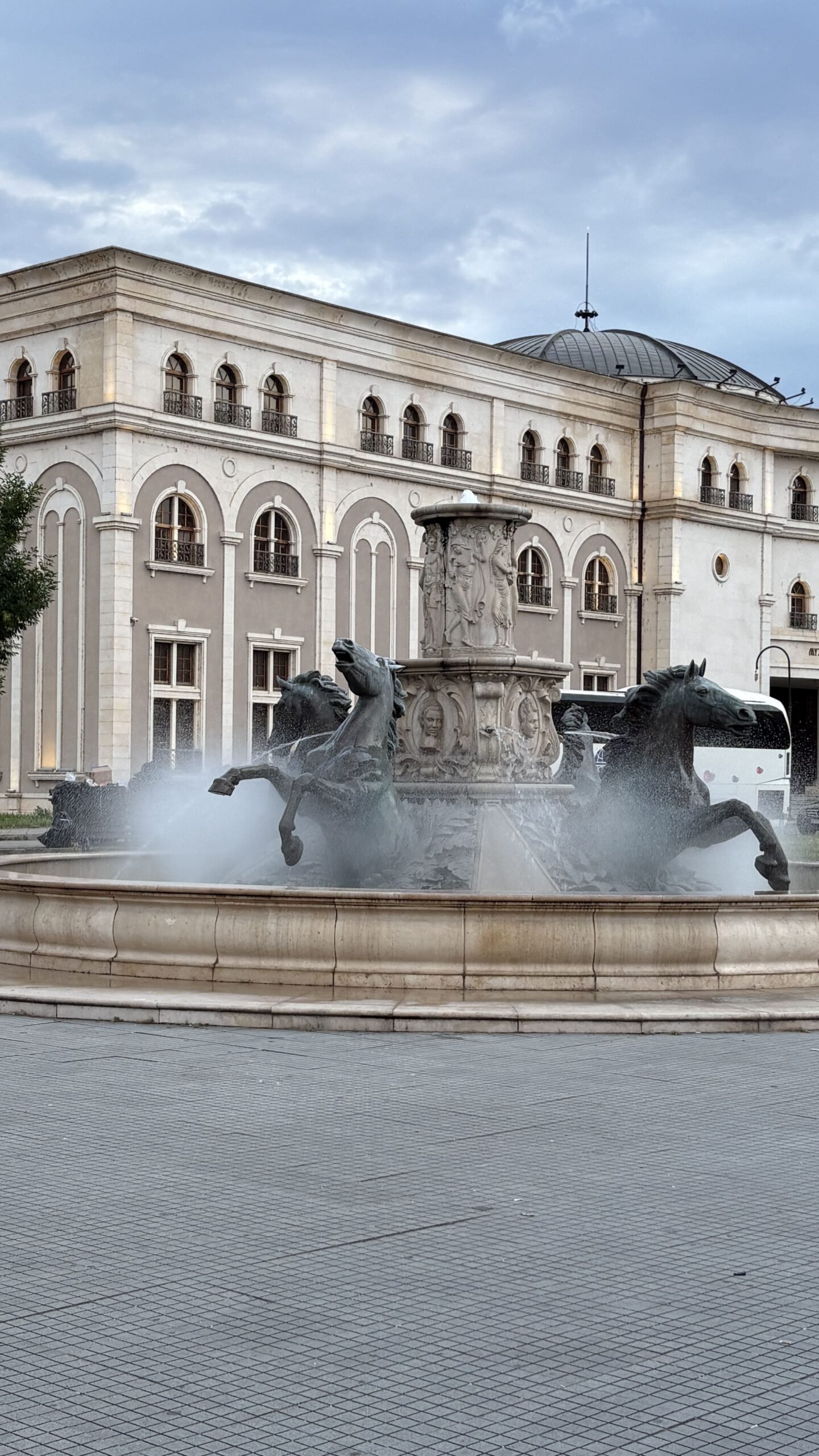
- Skopje 2014 side: Marble, statues, fountains, neoclassical government buildings
Skopje 2014 is huge and controversial project of North Macedonia because of Euro 500 Million expenditure, but it is the reason people talk about Skopje. You cannot ignore it.
It turned the city center into an open-air theme park of Macedonian history. Walk from the Ottoman bazaar → across the Stone Bridge → into marble-square in 5 minutes. That whiplash is Skopje now and makes the city interesting.
Our Journey:
Day 1:
Afternoon: Macedonia Square + Stone Bridge
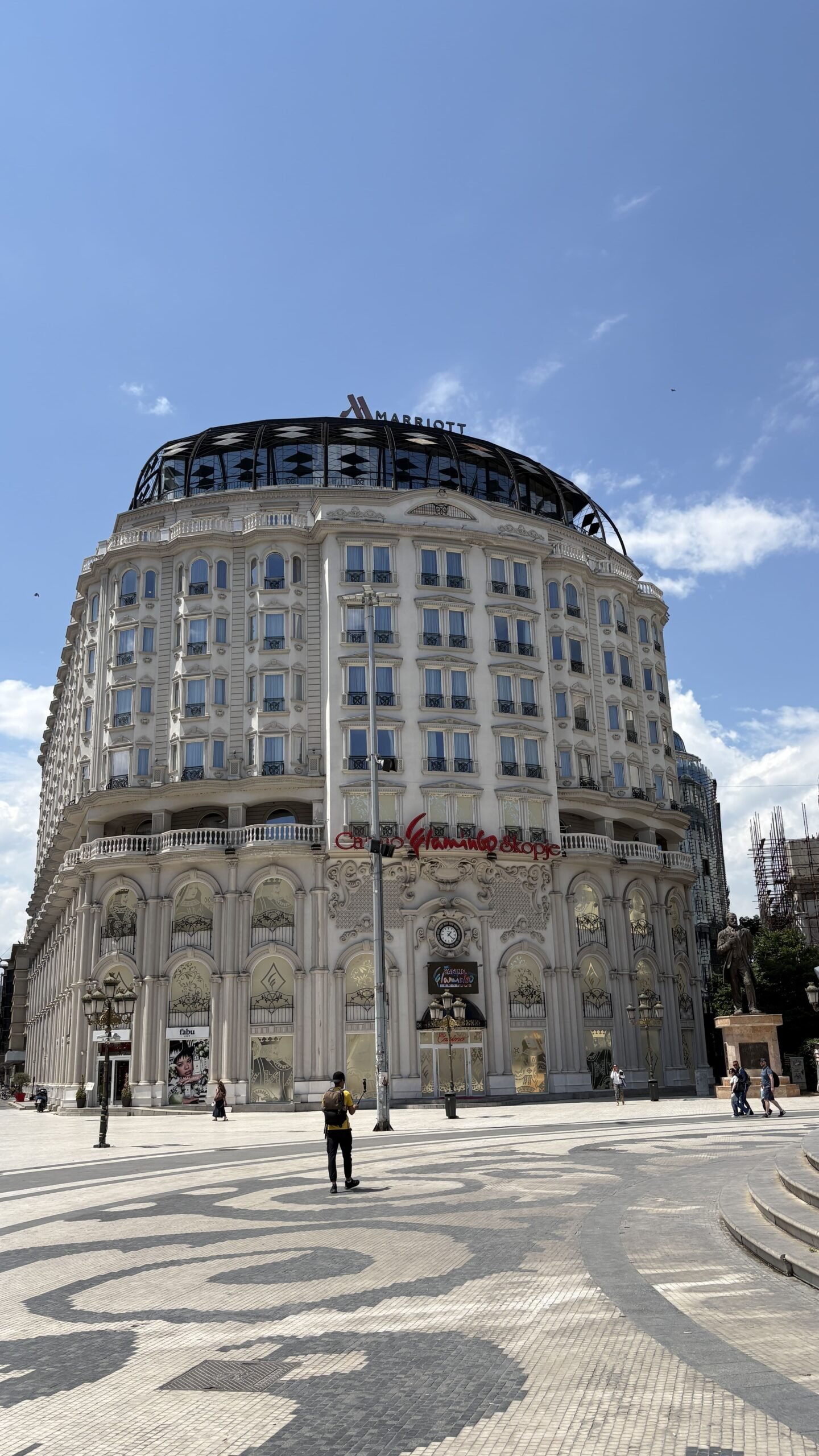
An early morning departure from Thessaloniki by rented vehicle, landed us in Skopje by 11-30 am. Our hotel was exactly at the famous Macedonia square and after an early check in, we started exploring the city on foot.
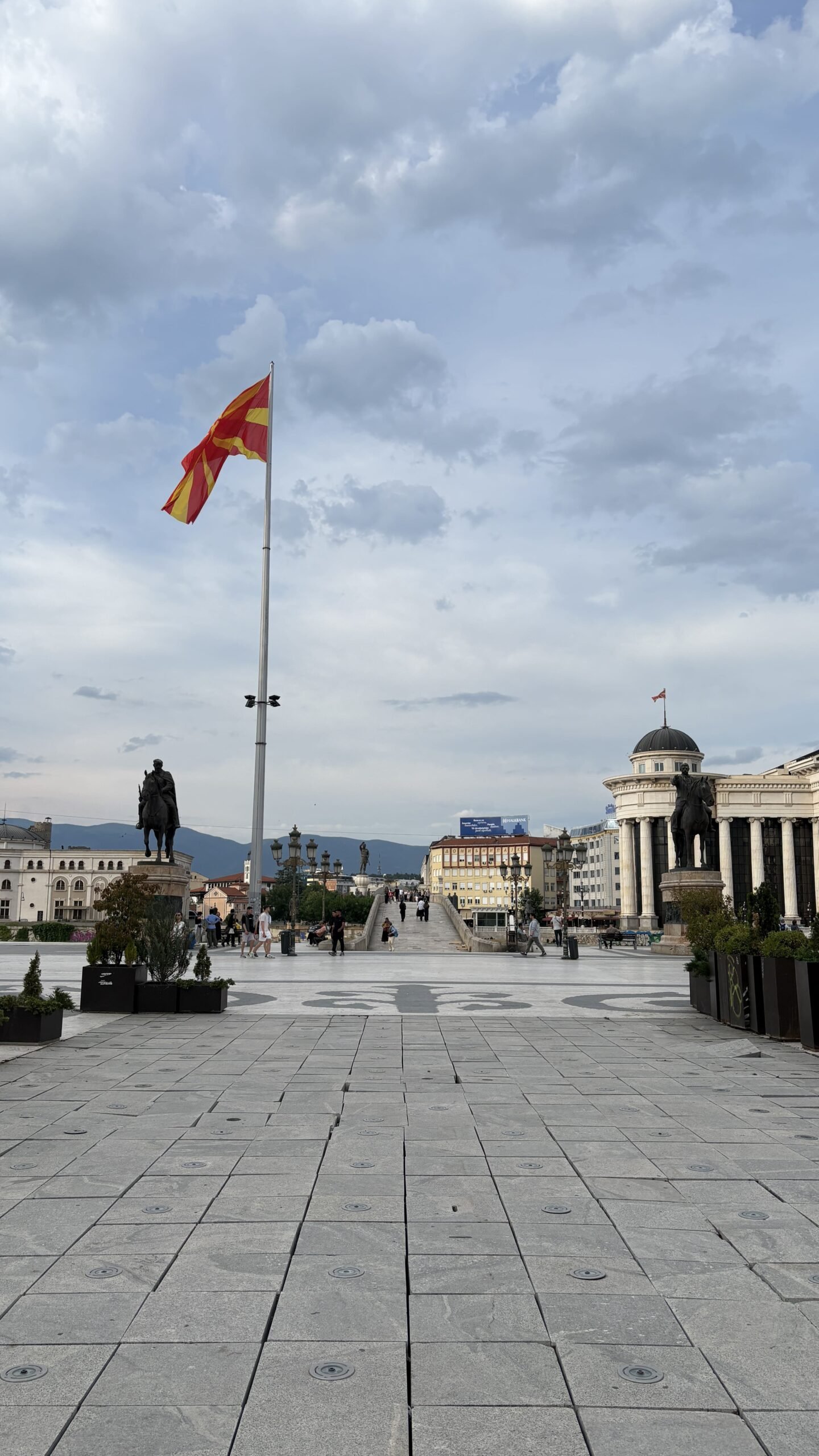
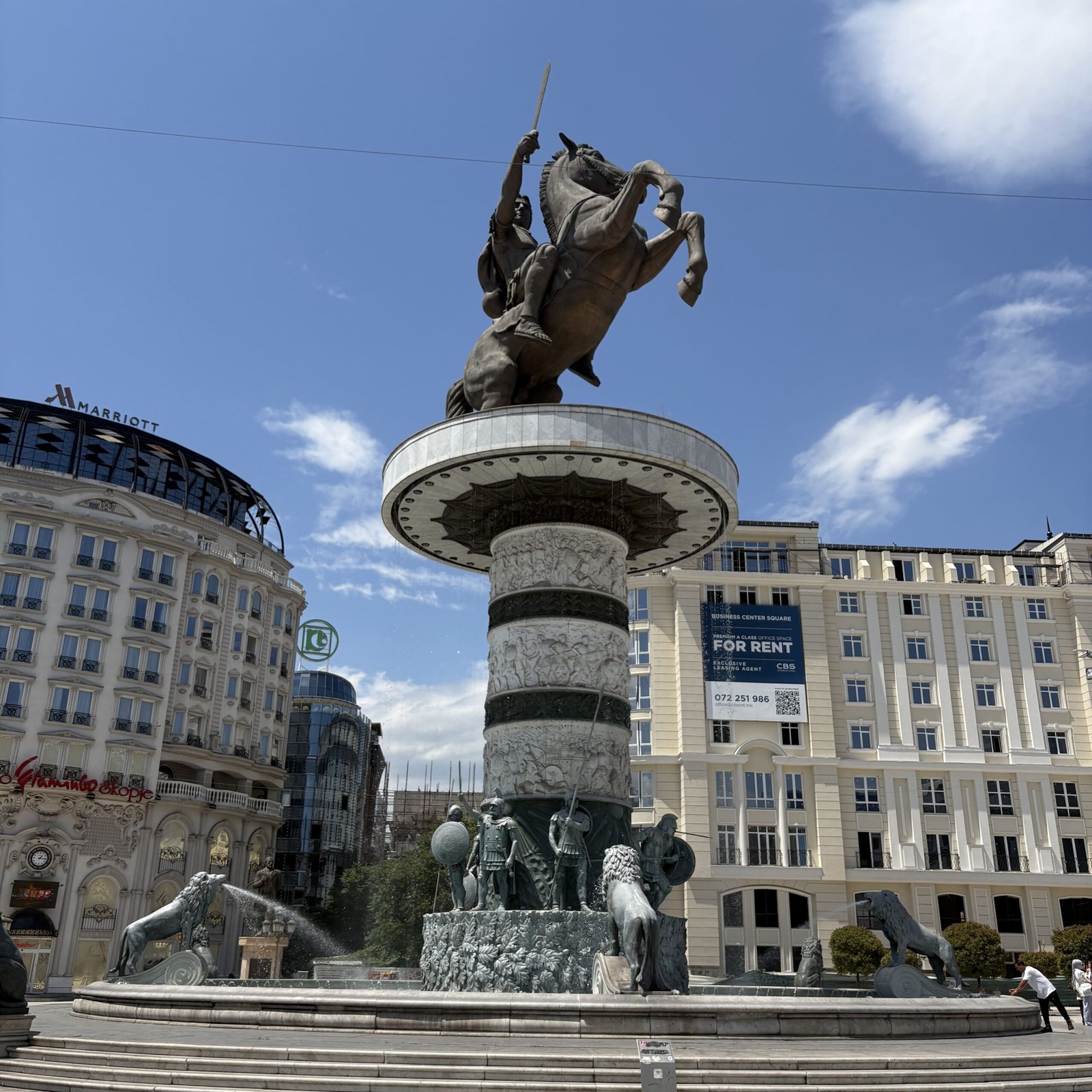
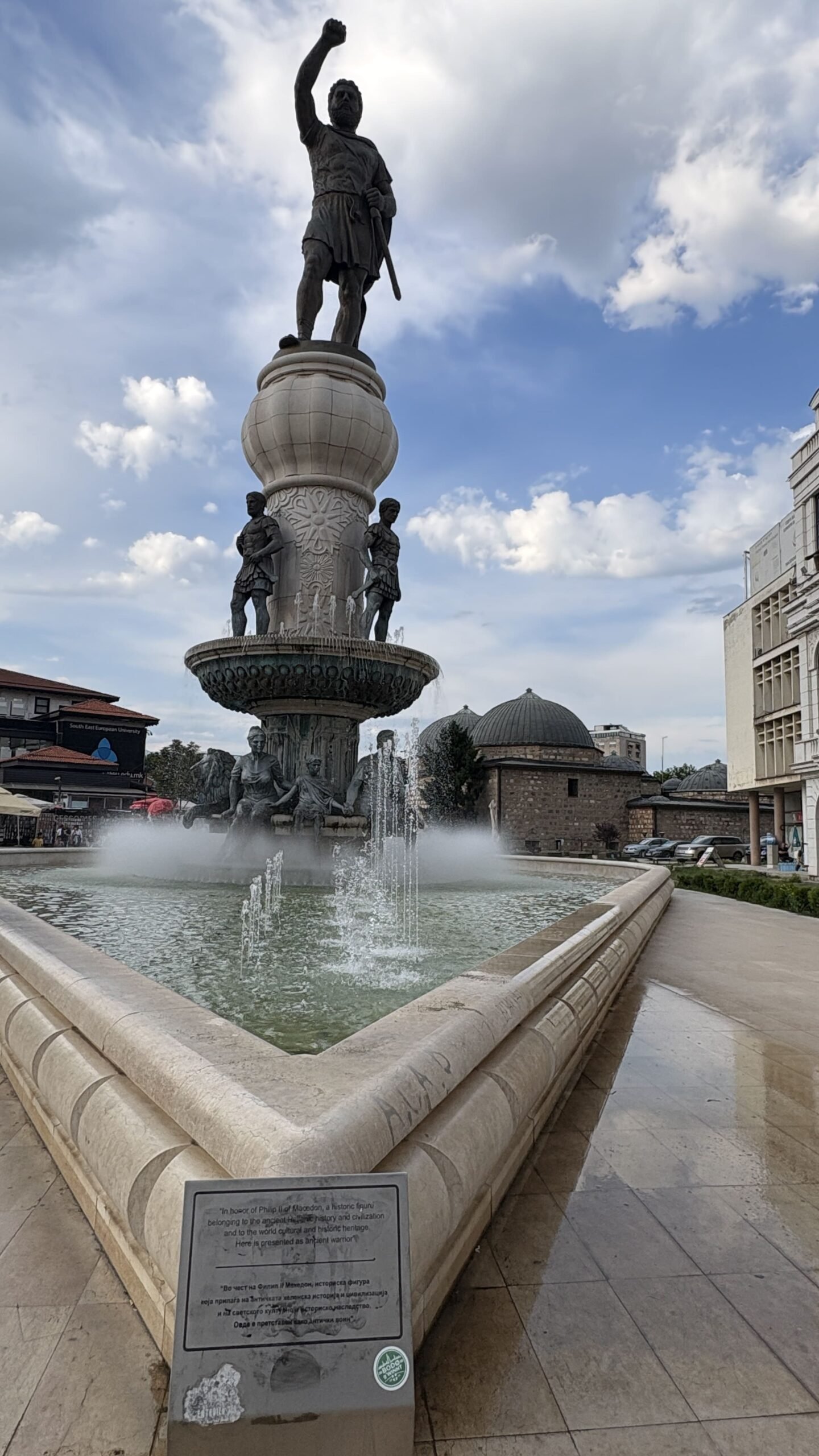
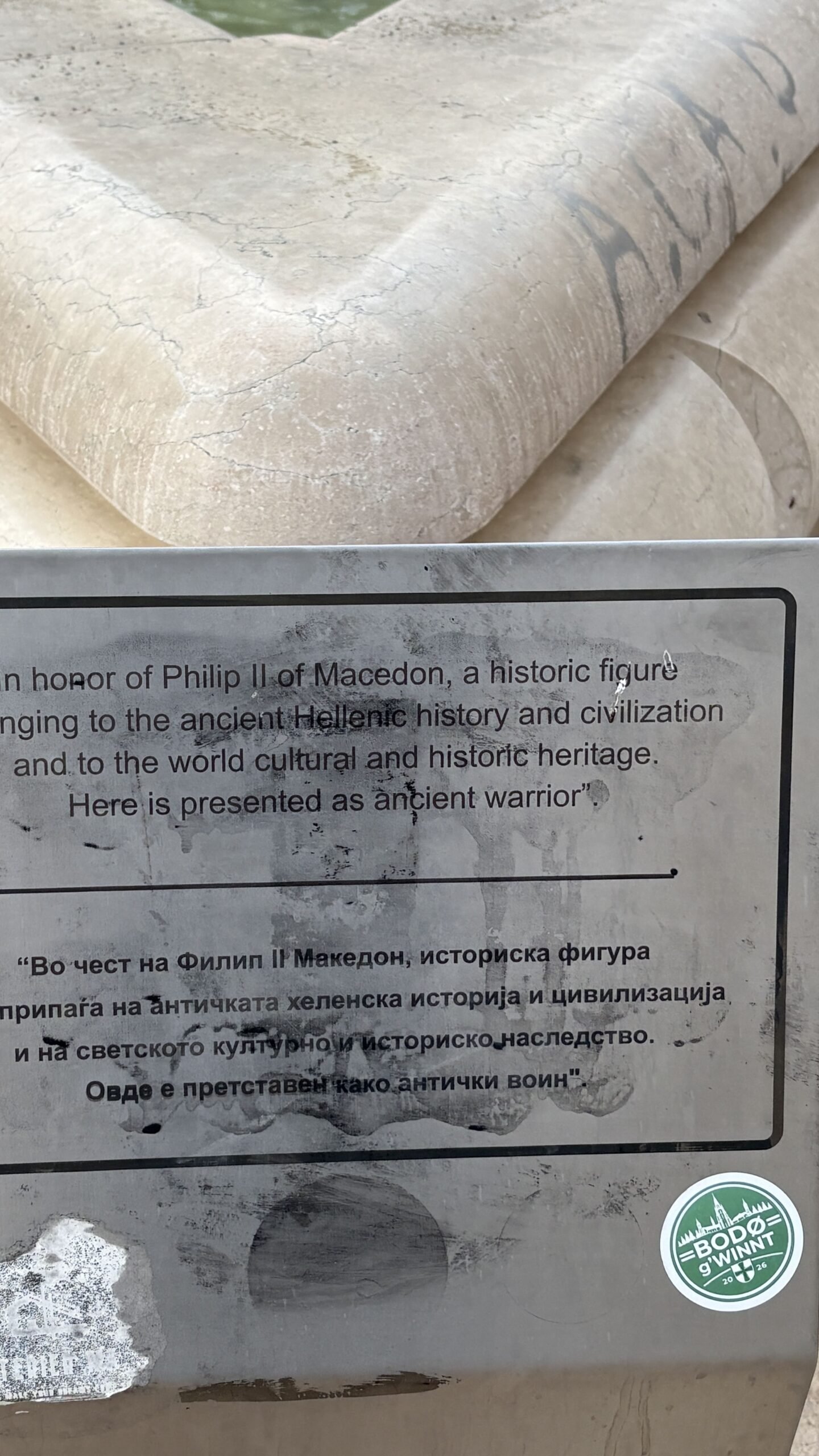
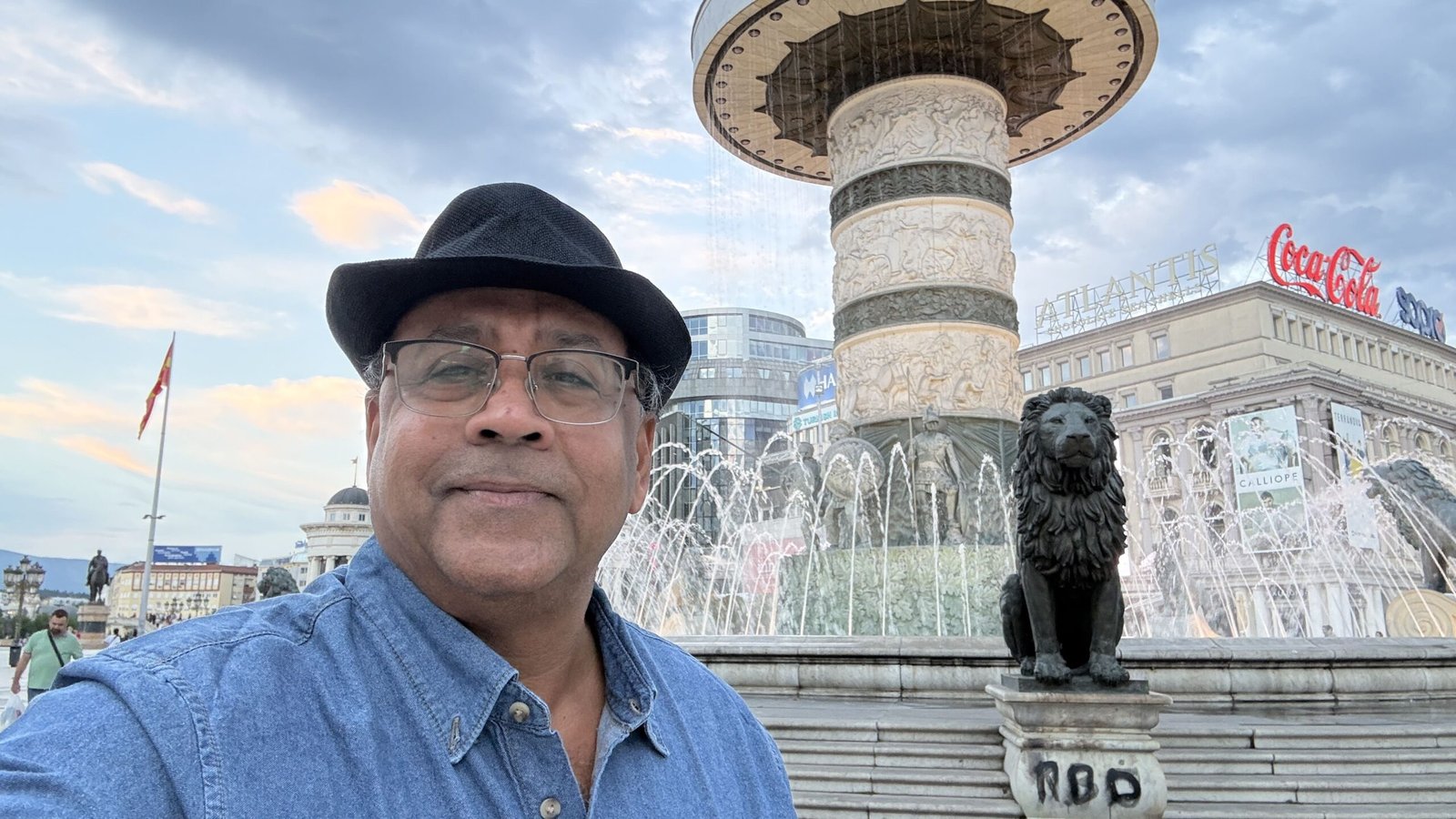
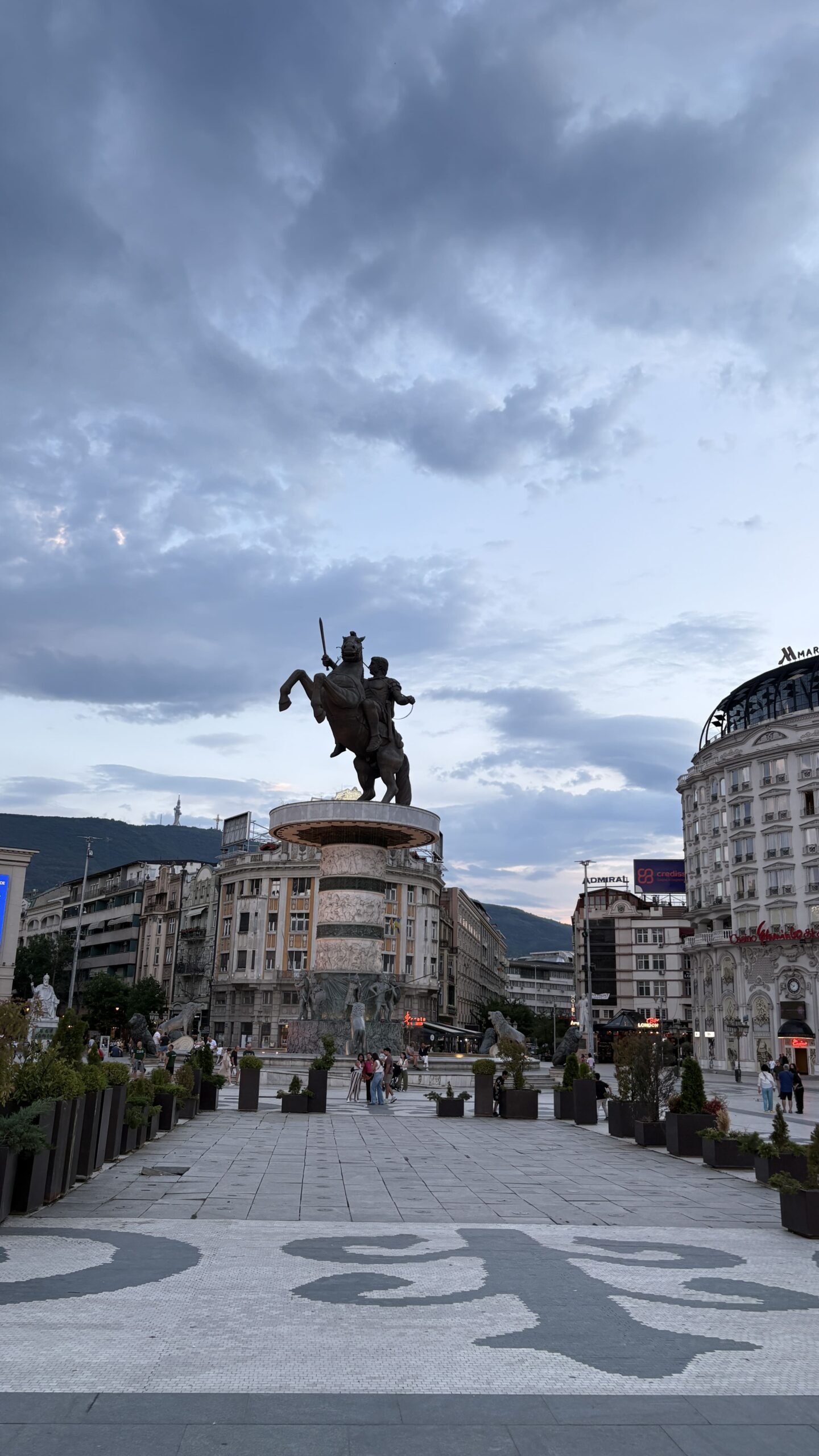
We started where Skopje starts every argument: Macedonia Square. Huge marbled city center dotted with multiple statues along with lively bars and eateries. The big one is “Warrior on a Horse” in Macedonia Square – 22m tall with a fountain. Officially not Alexander the Great because of the name dispute with Greece, but, it’s him.
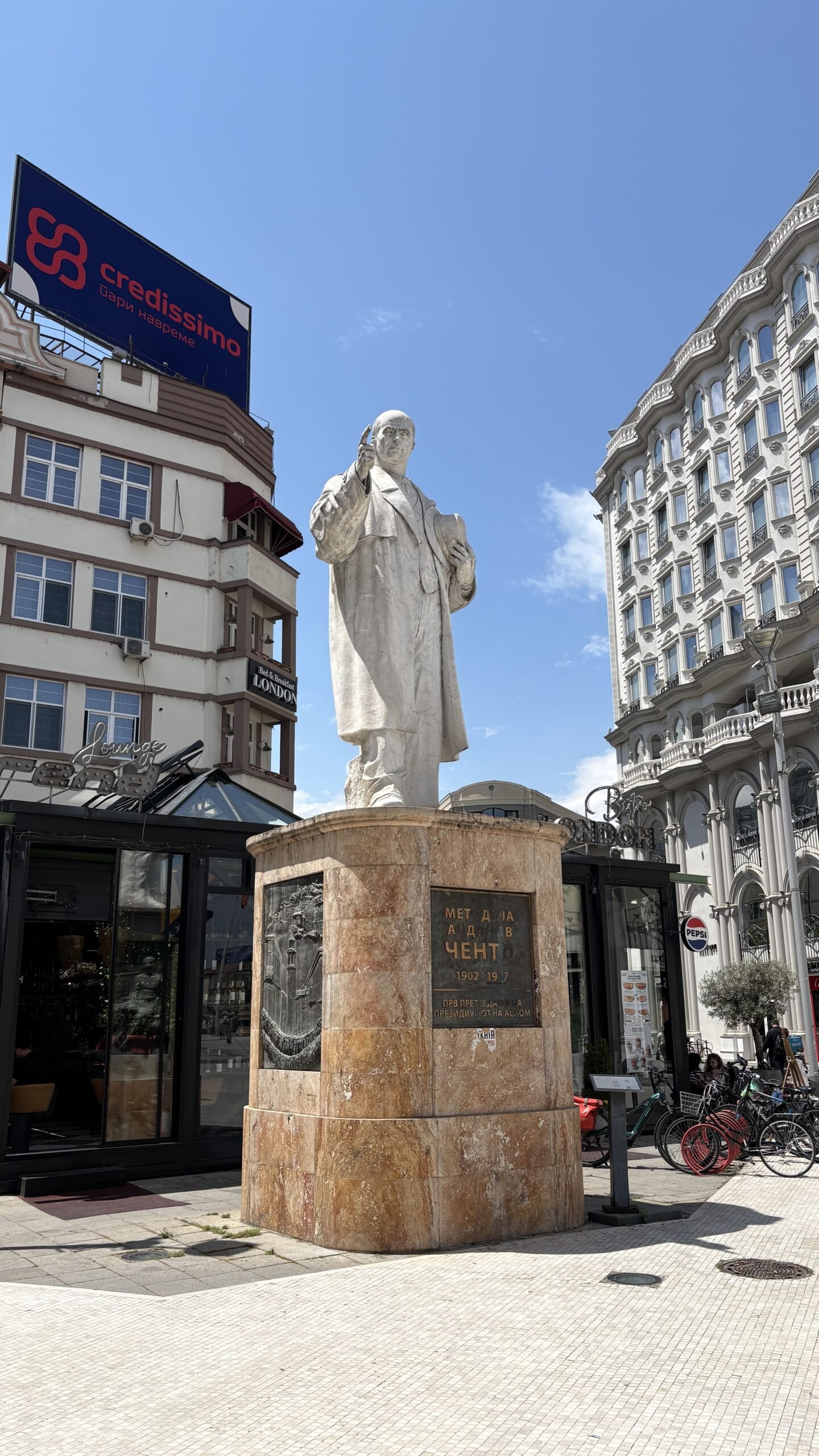
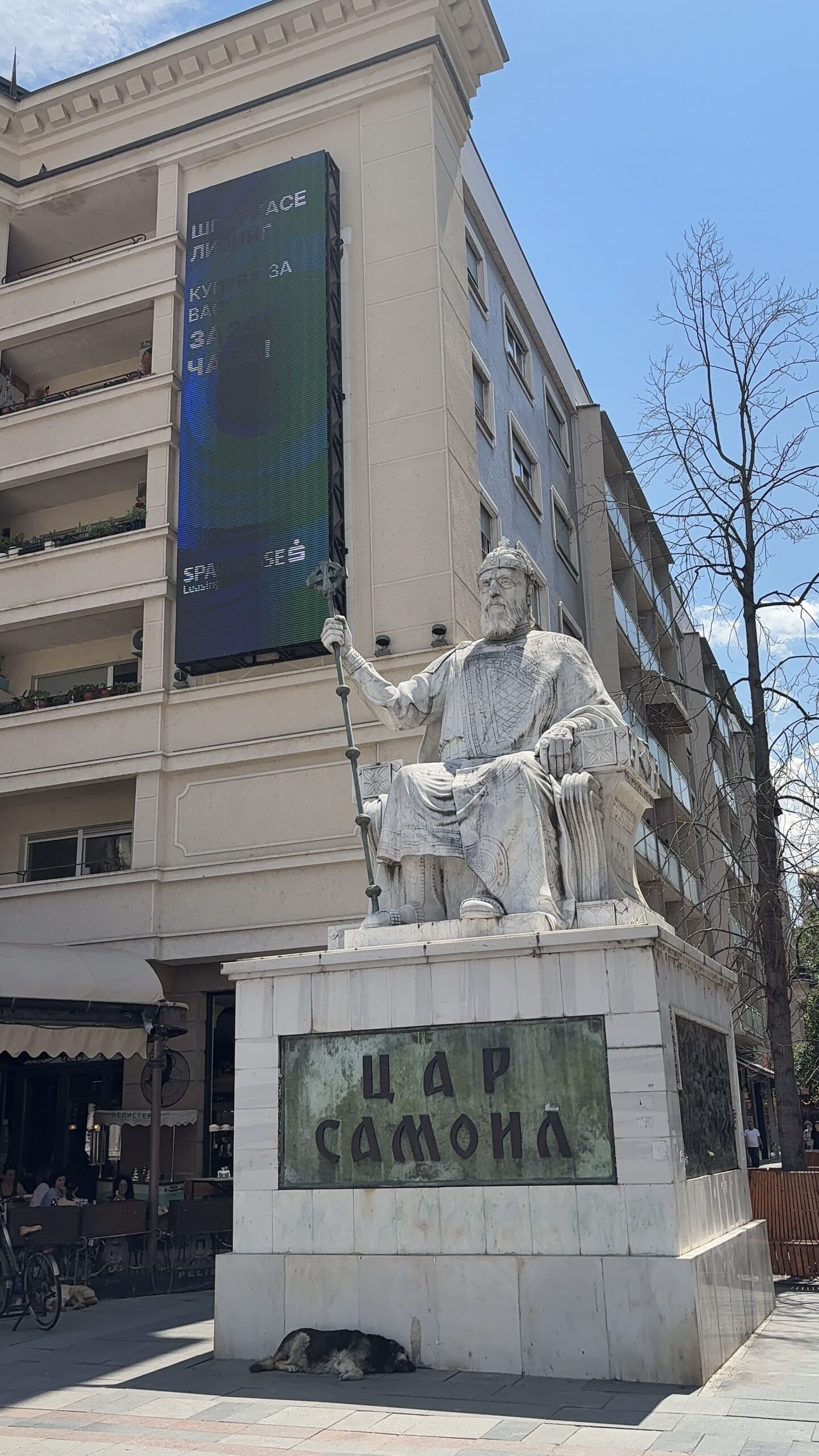
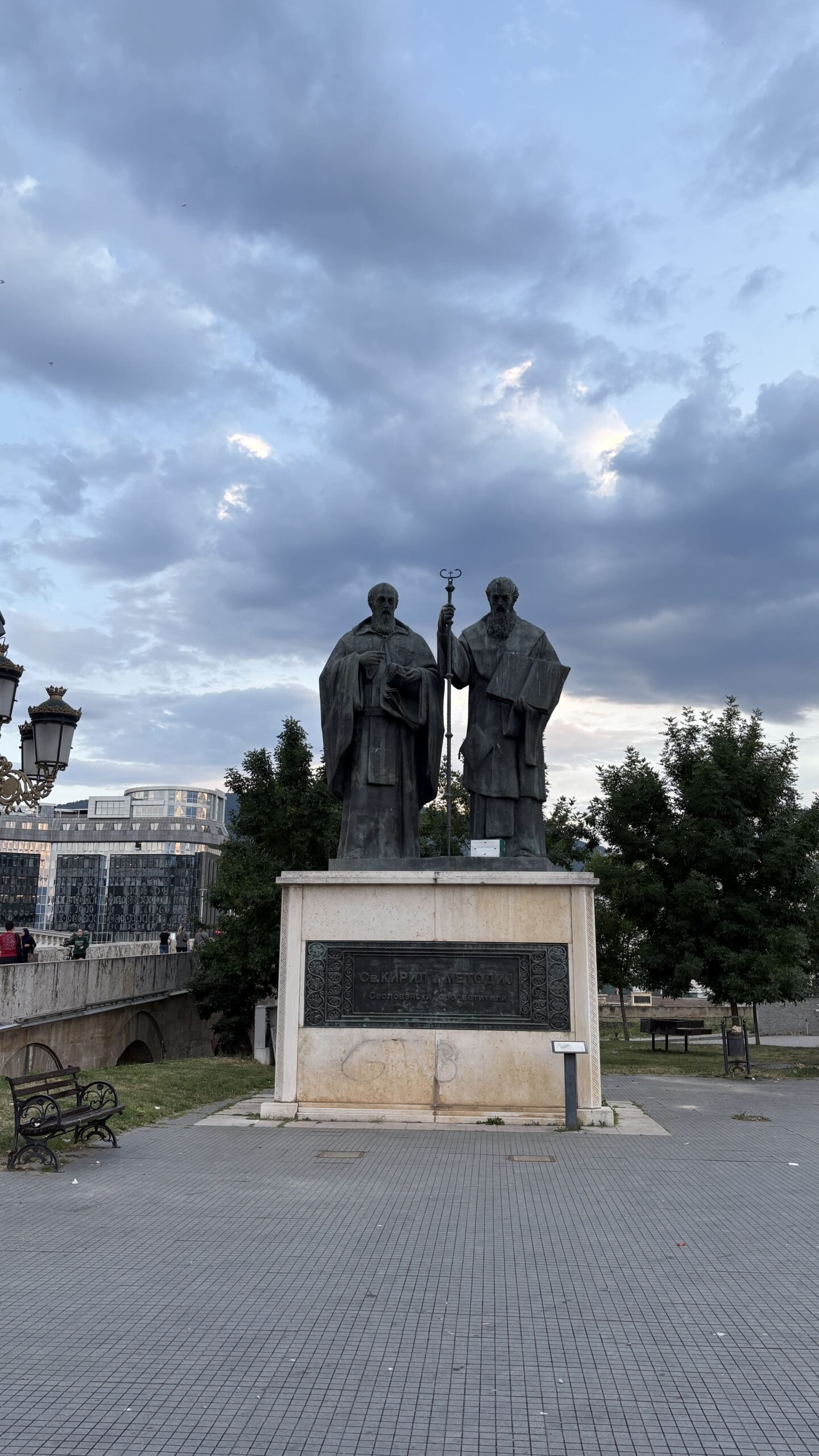
There were statues of Justinian, Cyril & Methodius, Mother Teresa, and random everyday people like “a man buying shoes.” Amazed by the number of statues overlooking us, we could not help but took many photographs.
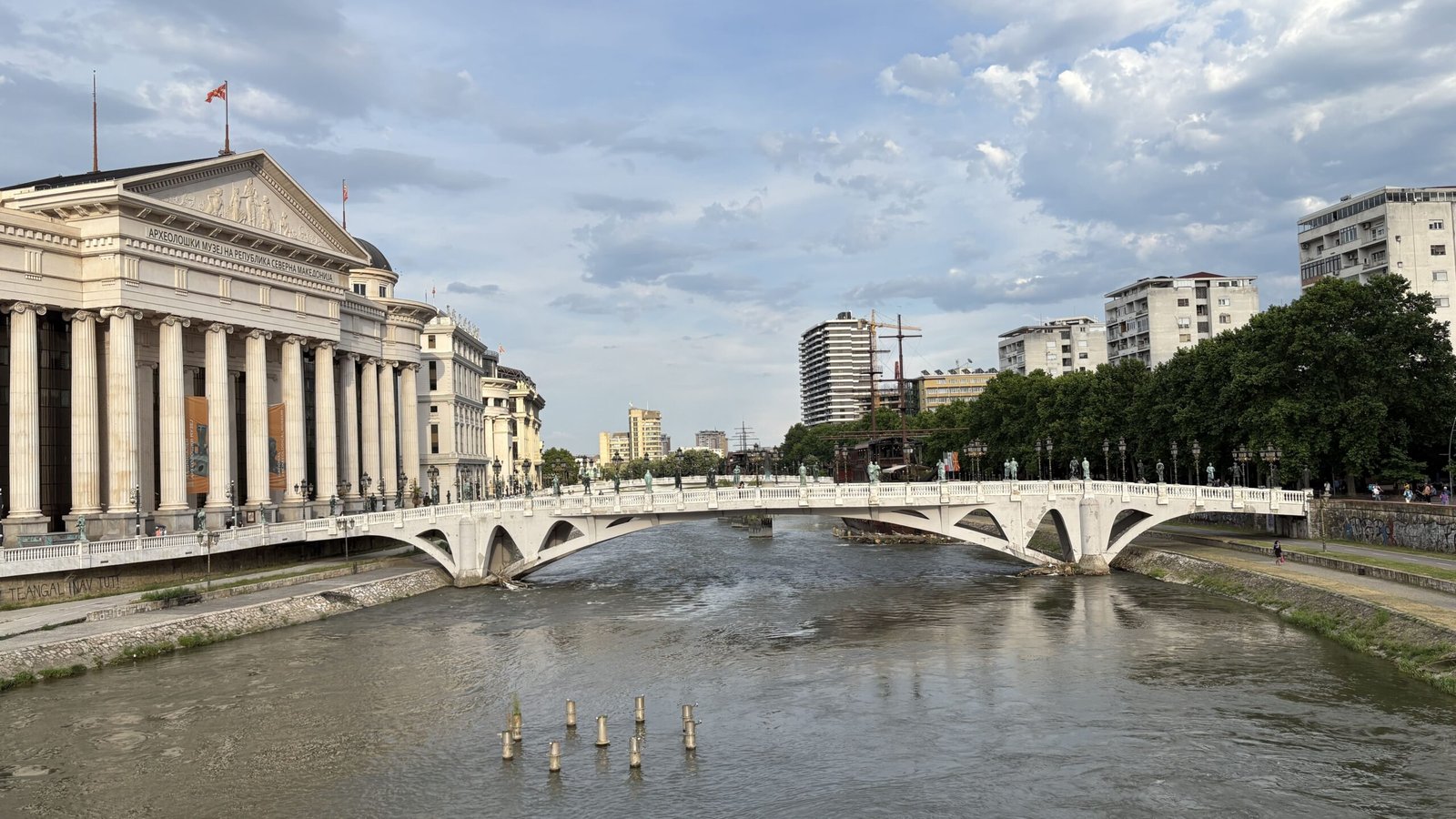
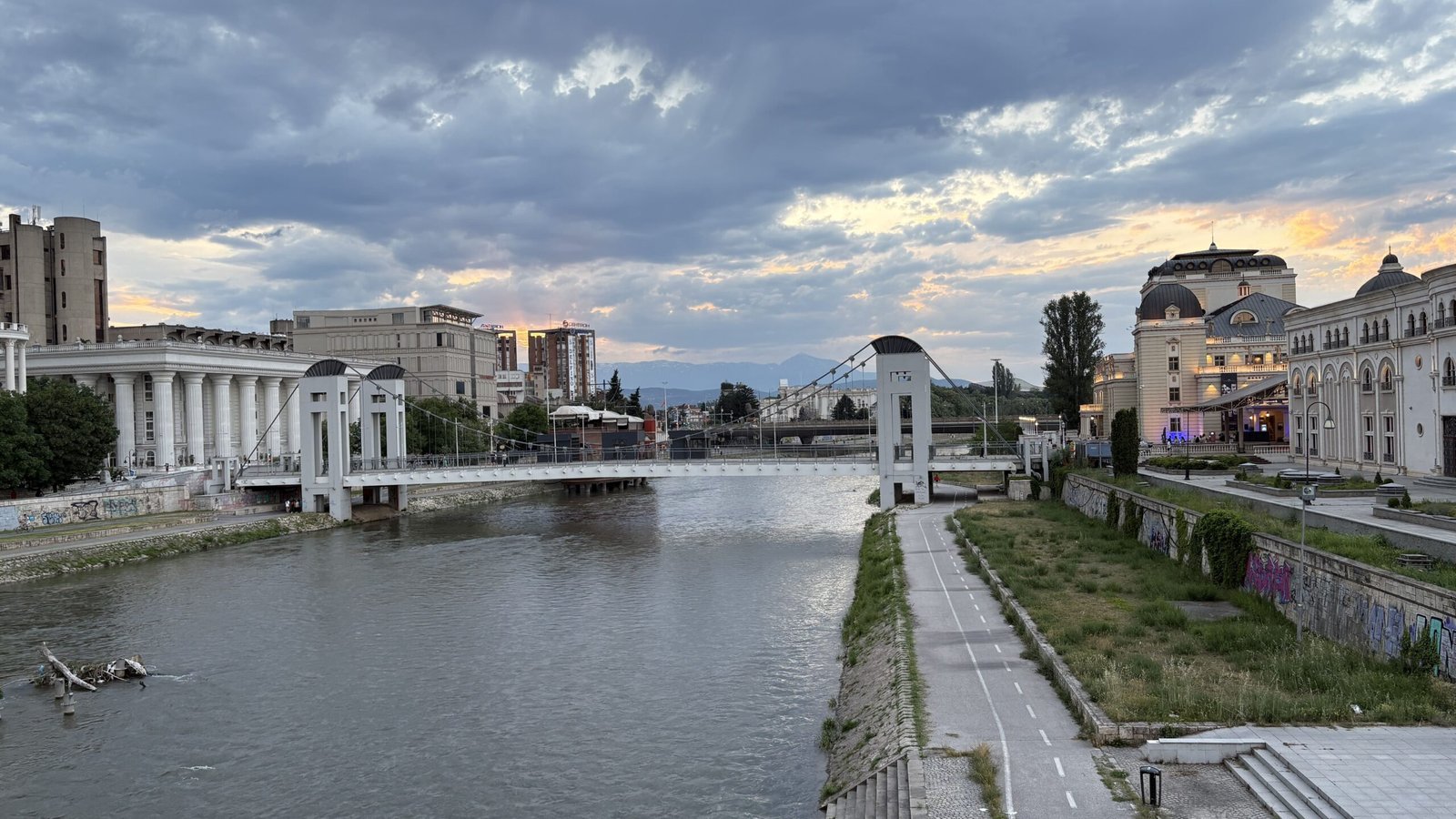
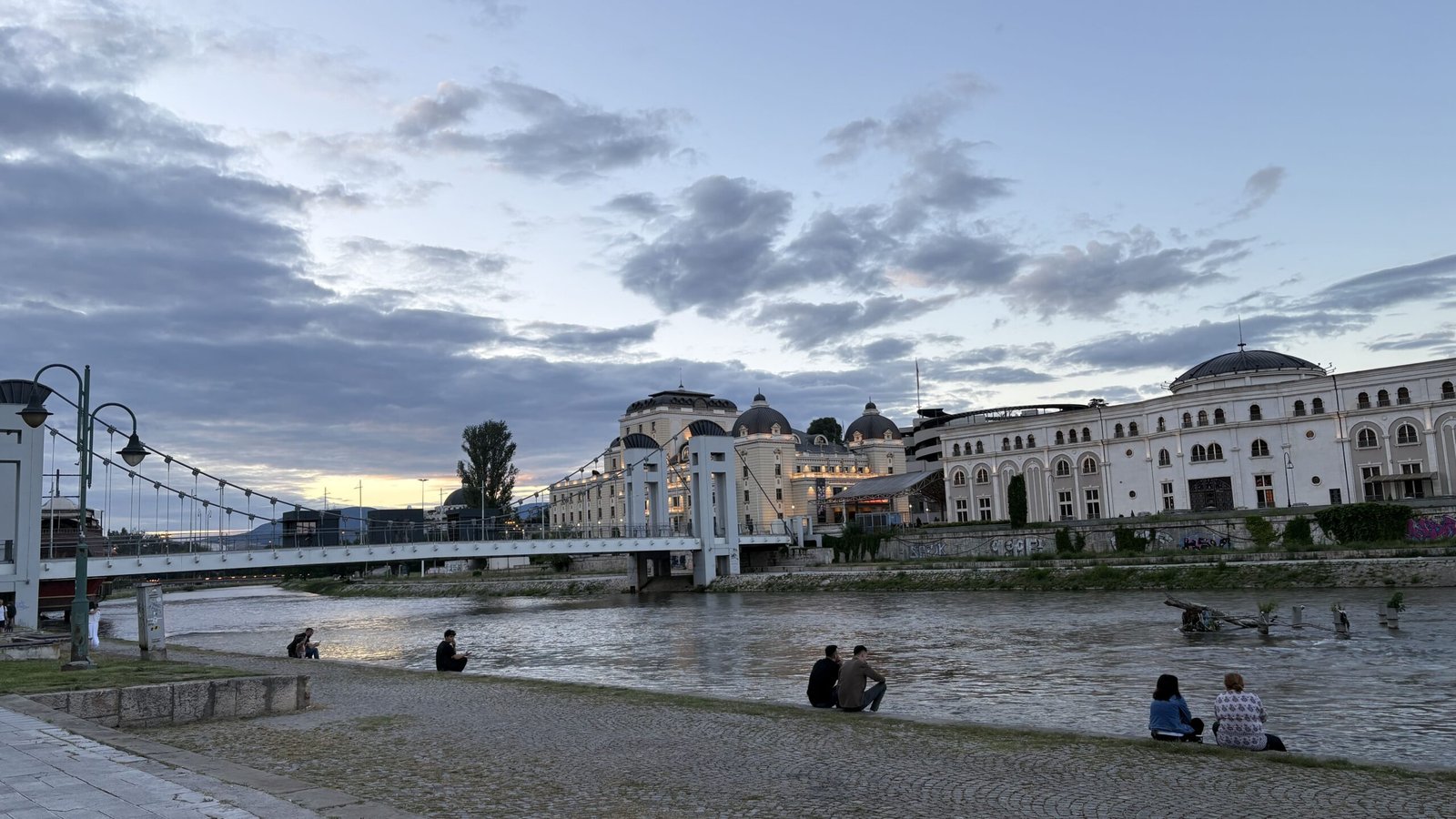
We walked across the 15th-century Stone Bridge. On one side: Skopje 2014. On the other: the Old Bazaar. The bridge is the timeline.
Evening: The Old Bazaar
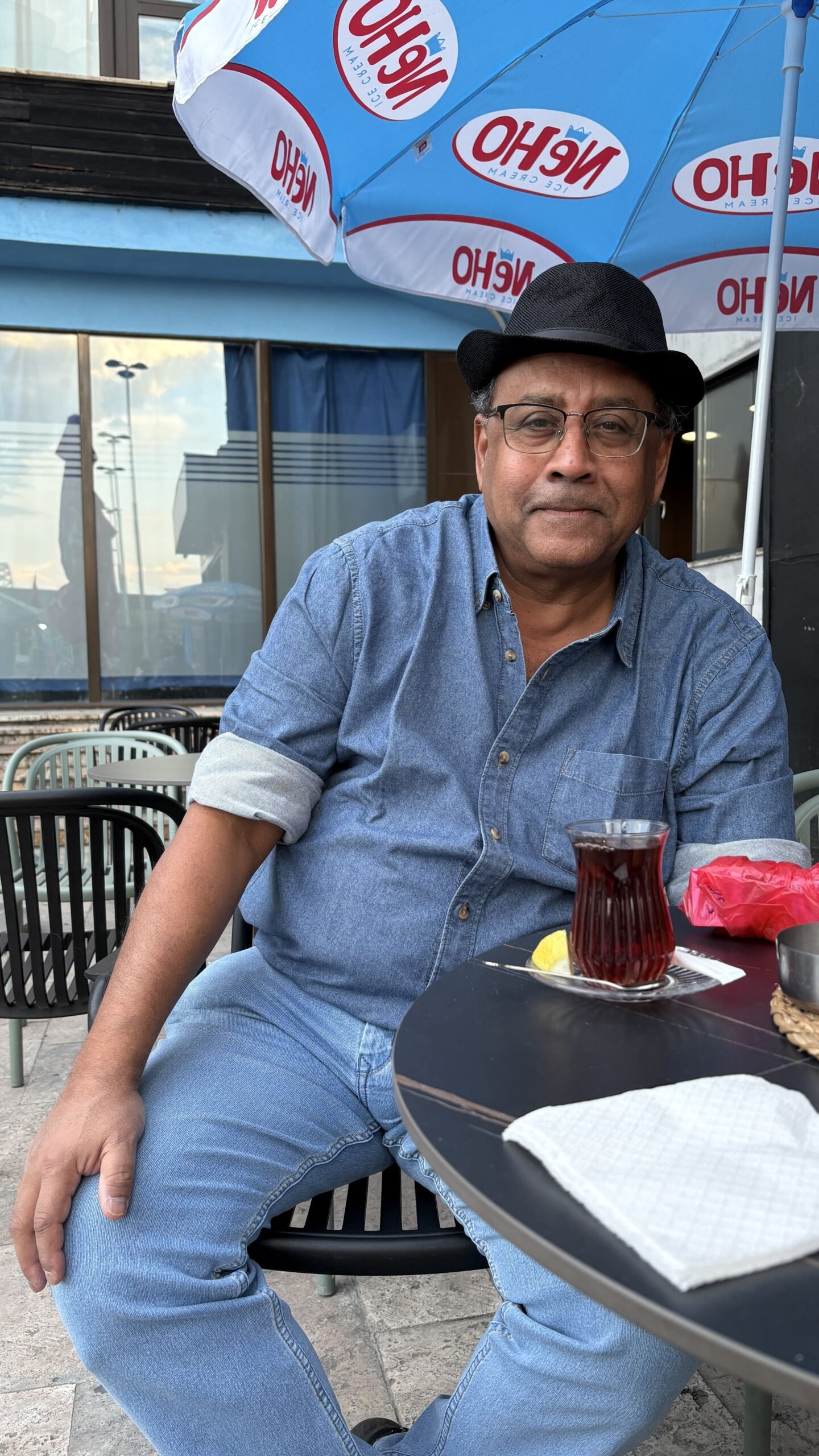
The Old Bazaar is the largest in the Balkans outside Istanbul. Mezes of streets inside. We sipped Turkish coffee, browsed silver filigree shops, popped into Čifte Hammam – now an art gallery – and Mustafa Pasha Mosque.
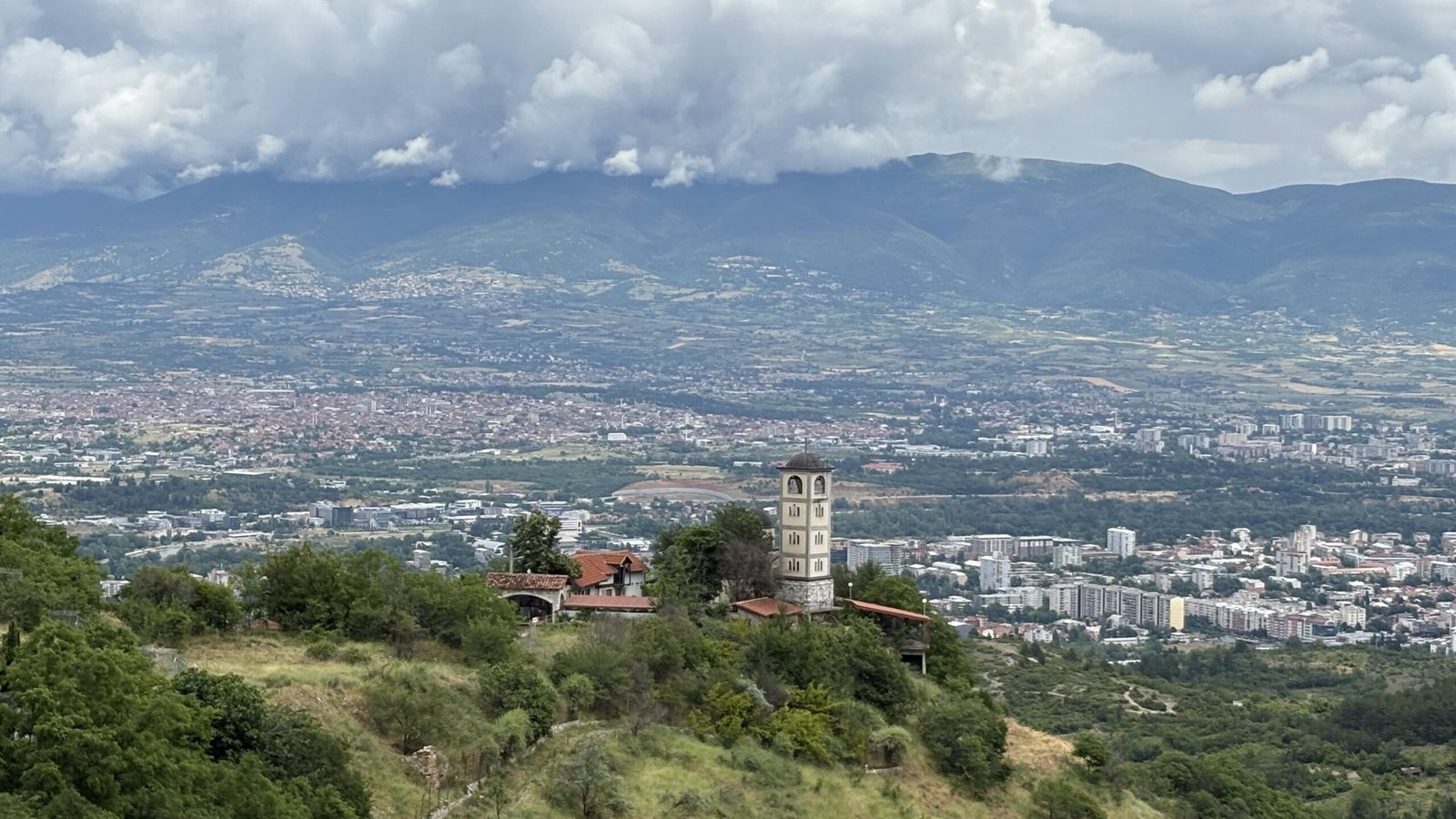
Then climbed to Kale Fortress. 10 minutes up, and suddenly we saw the whole city: minarets vs. triumphal arches, Vardar River splitting them in half. One should spend good time here for the view. It explains Skopje better than any guide. Sunset view is truly memorable from this point.
Night: Dinner
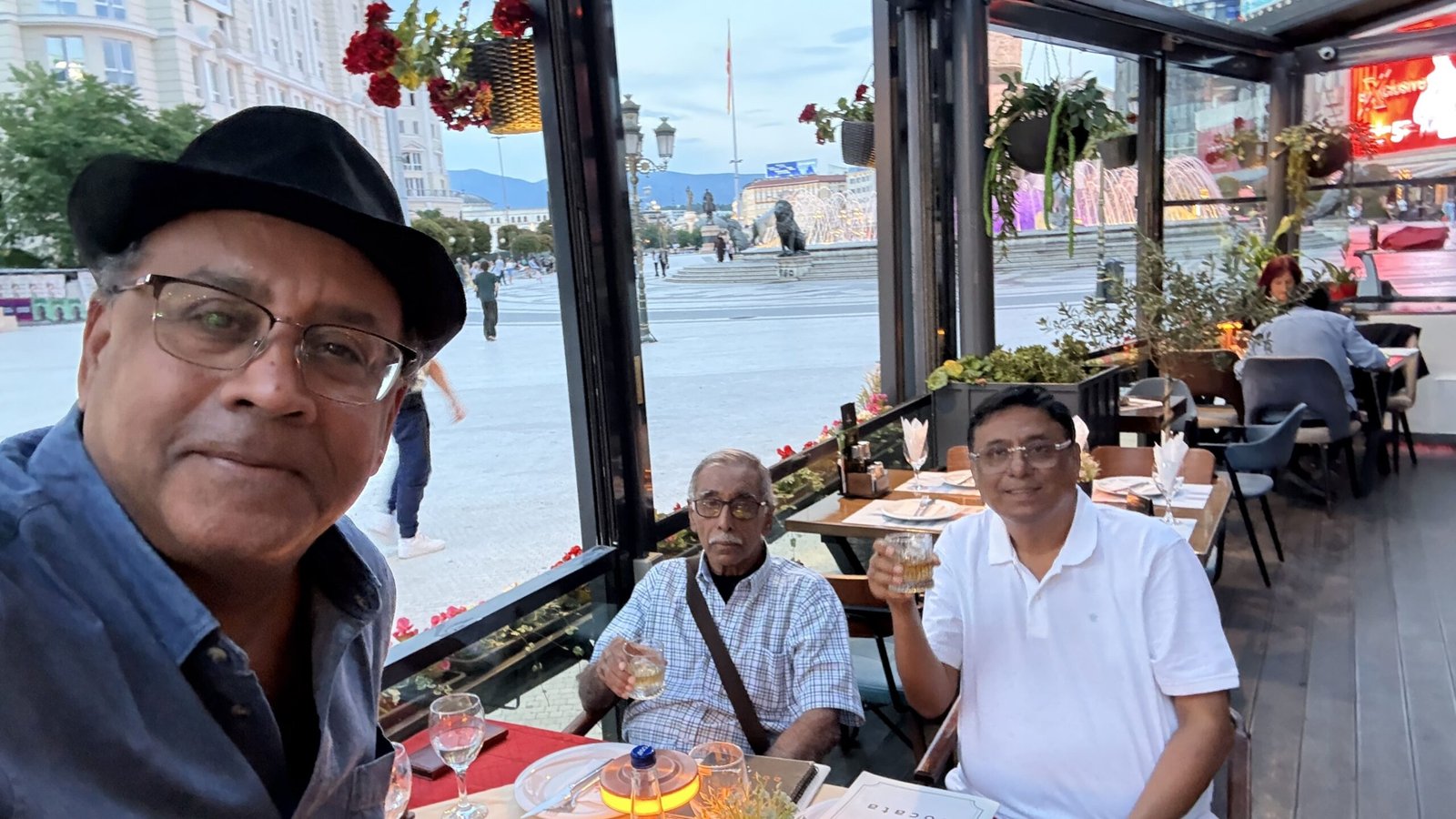
We stopped at one of the restaurants in the square- excellent kebaps, pilaf with local Rakia (fruit brandy) were best way to end a hectic day.
Day 2:
Morning: Matka Canyon
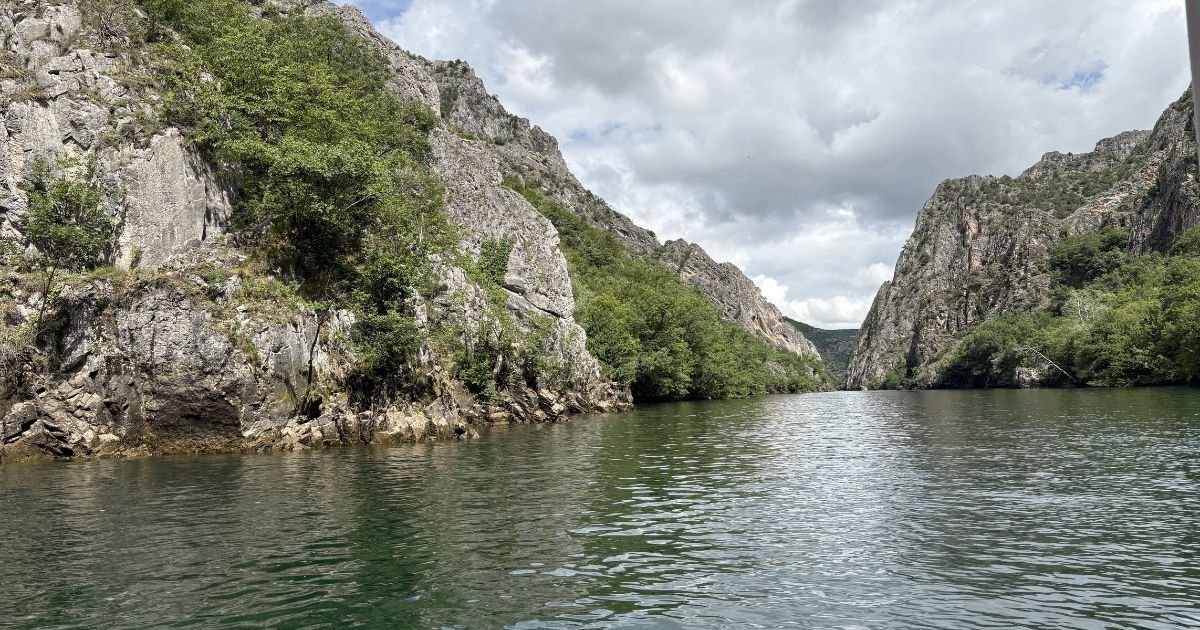
30 min from the city. We went from marble statues to limestone cliffs and emerald water in no time. “Matka” means “womb” in Macedonian, and the canyon feels like it – protected, enclosed, alive. (a separate blog is written about it)
After having grilled fish at one of the restaurants right on the water we came back to the city.
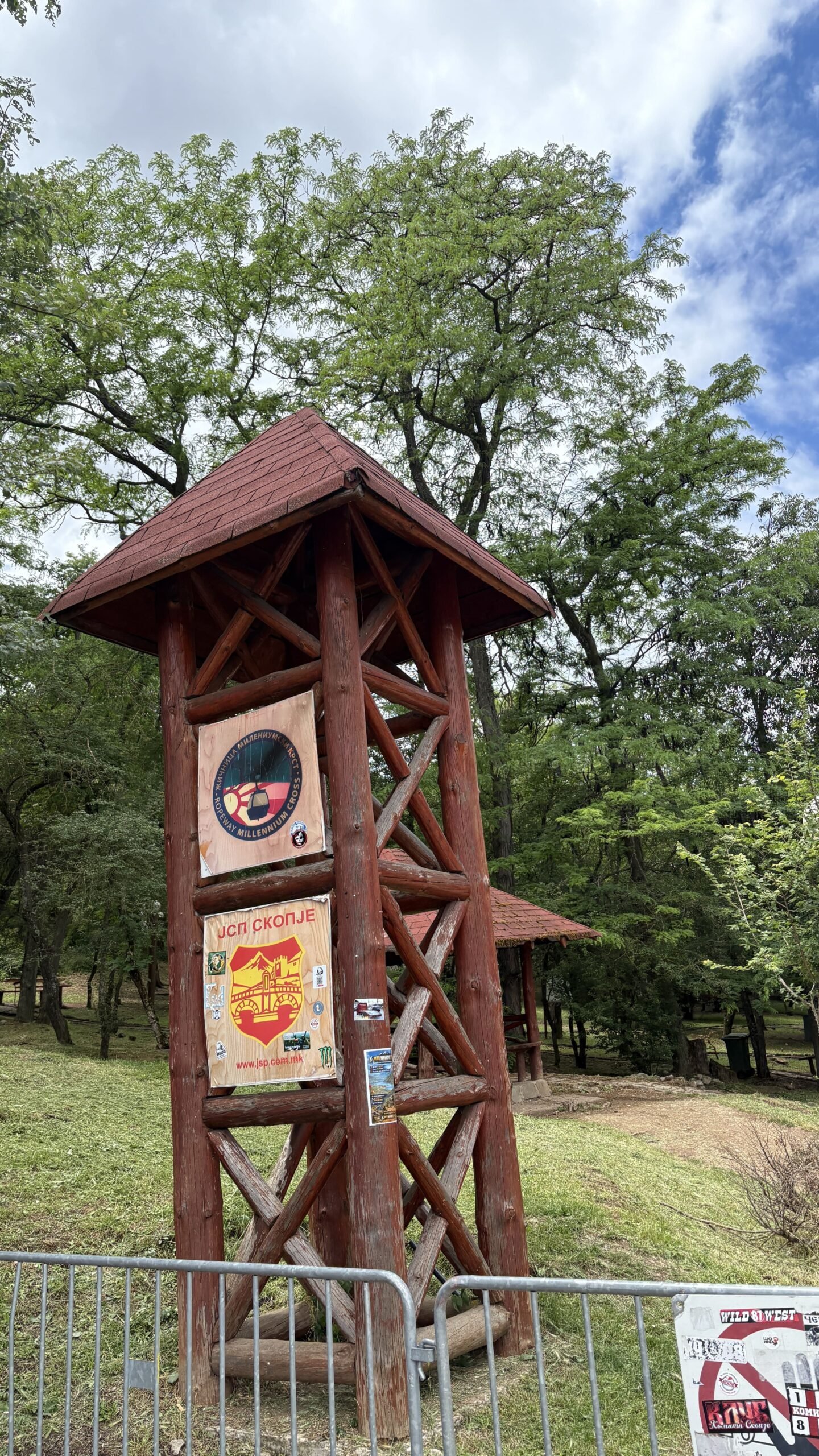
Vodno Mountain and Millennium Cross were on our next agenda. But we could not go up because cable car was under maintenance. The mountain sits right above Skopje and boasts of pine forests, trails and monasteries.
Millenium Cross was built in 2002 to mark 2000 years of Christianity in Macedonia and one can see it from almost anywhere in Skopje.
Afternoon: Mother Teresa House
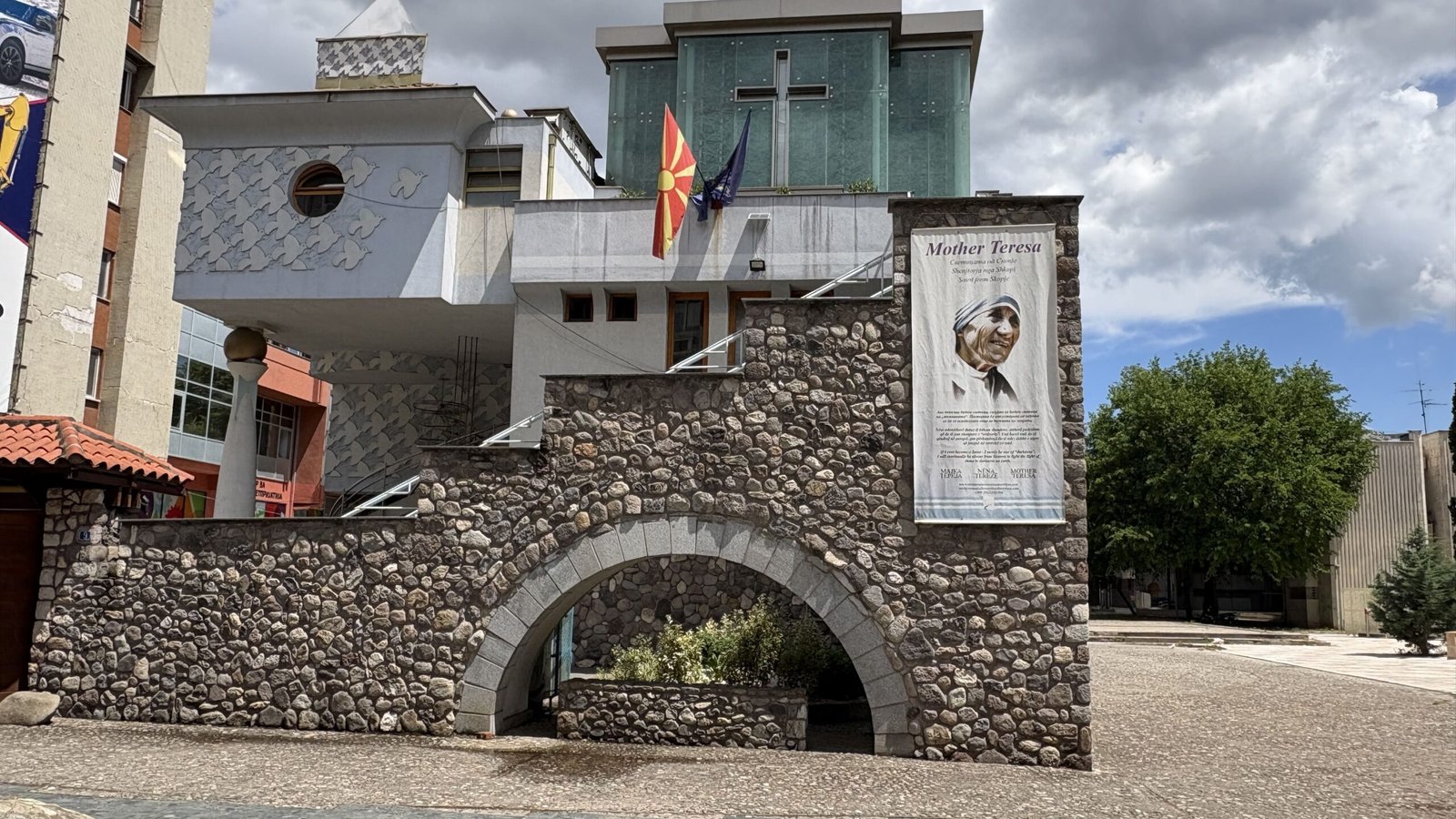
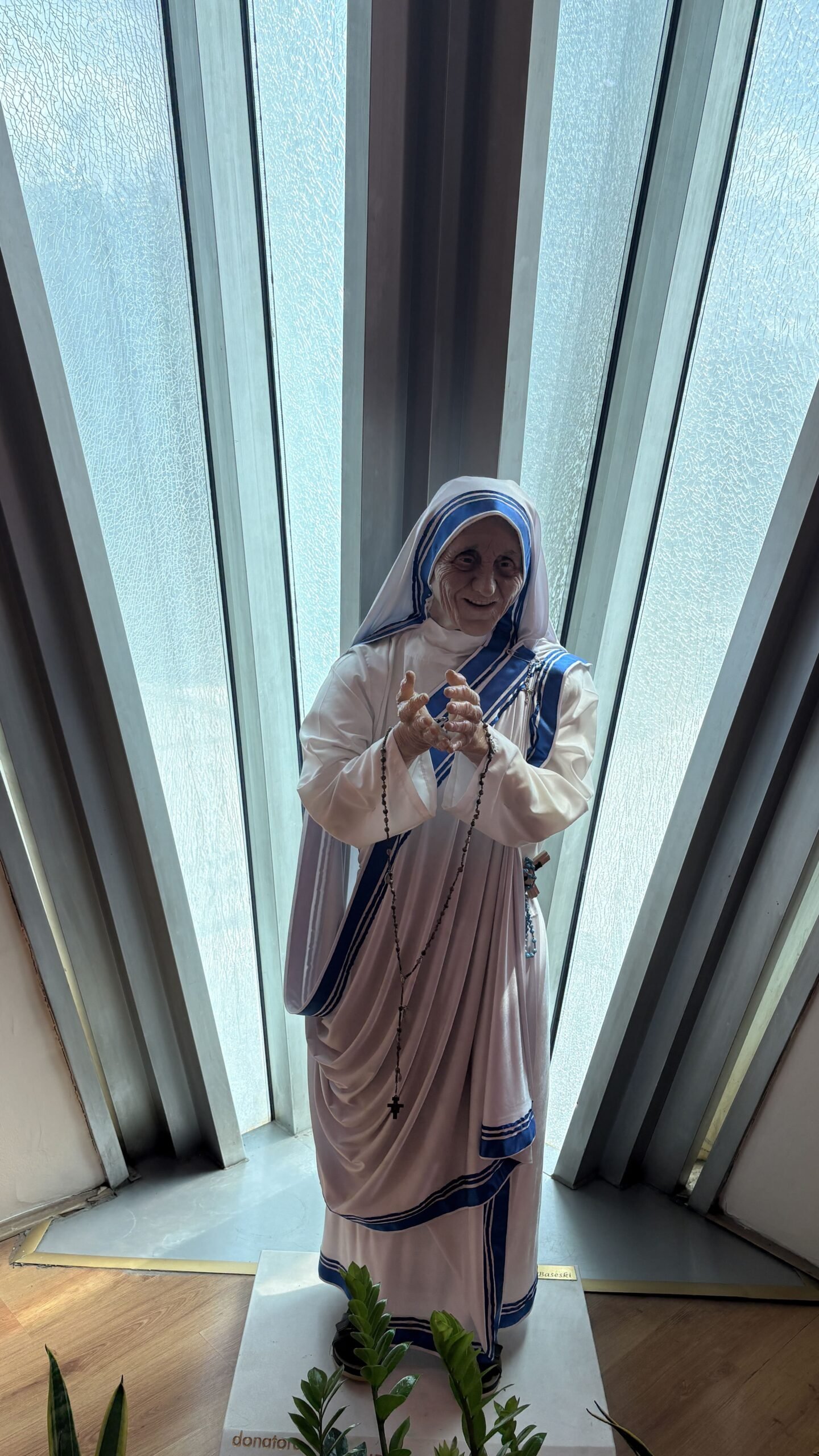
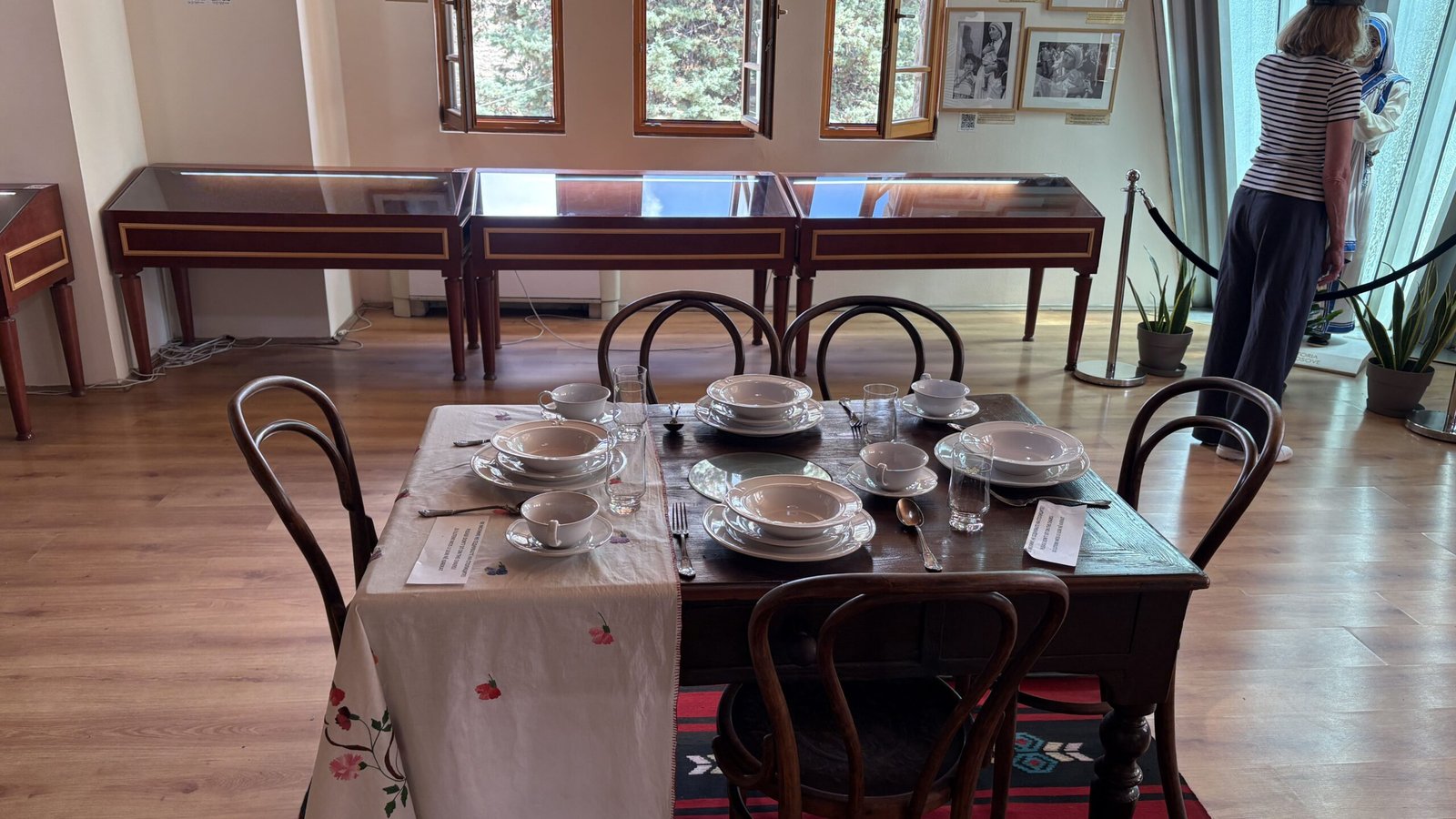
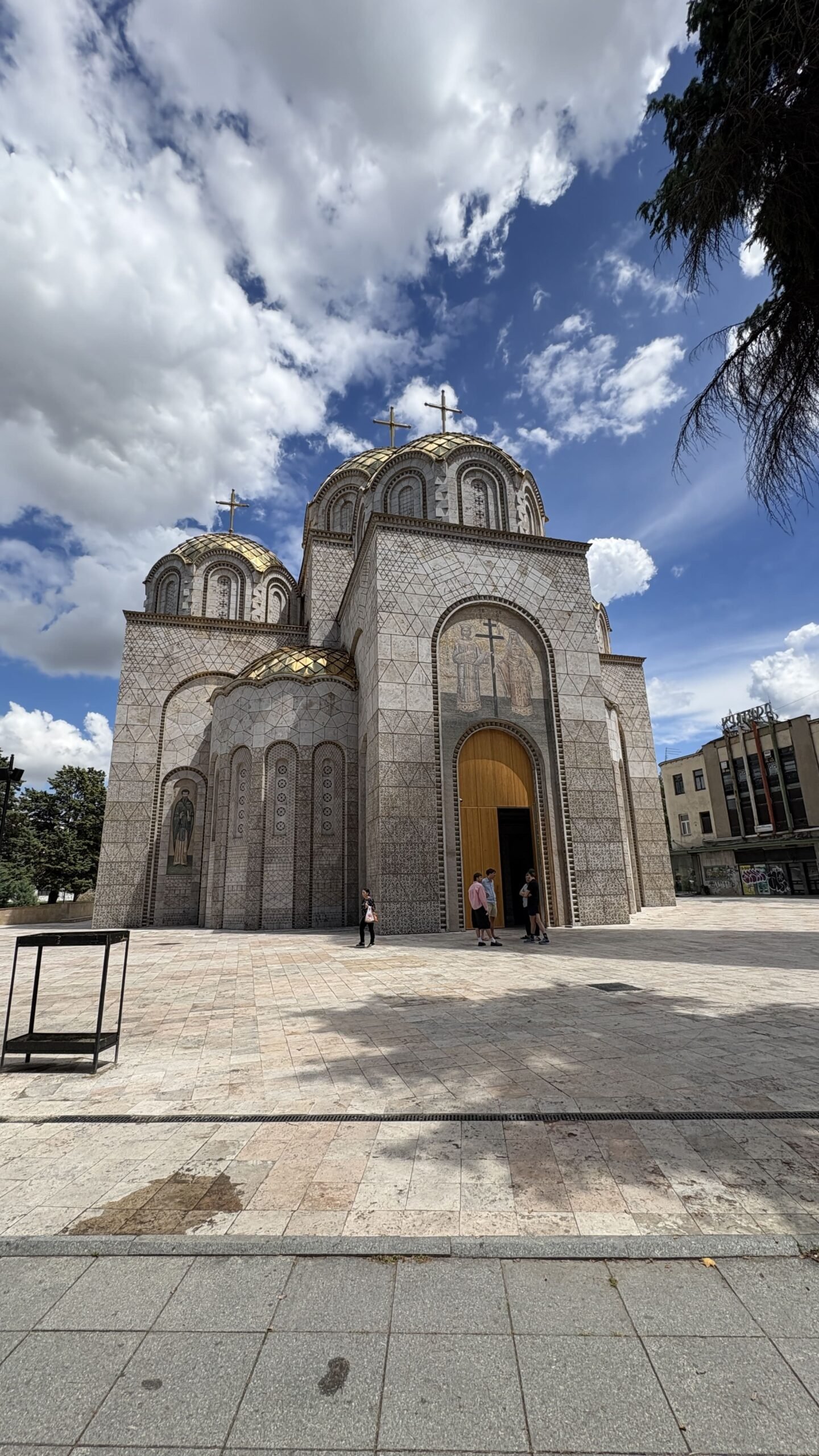
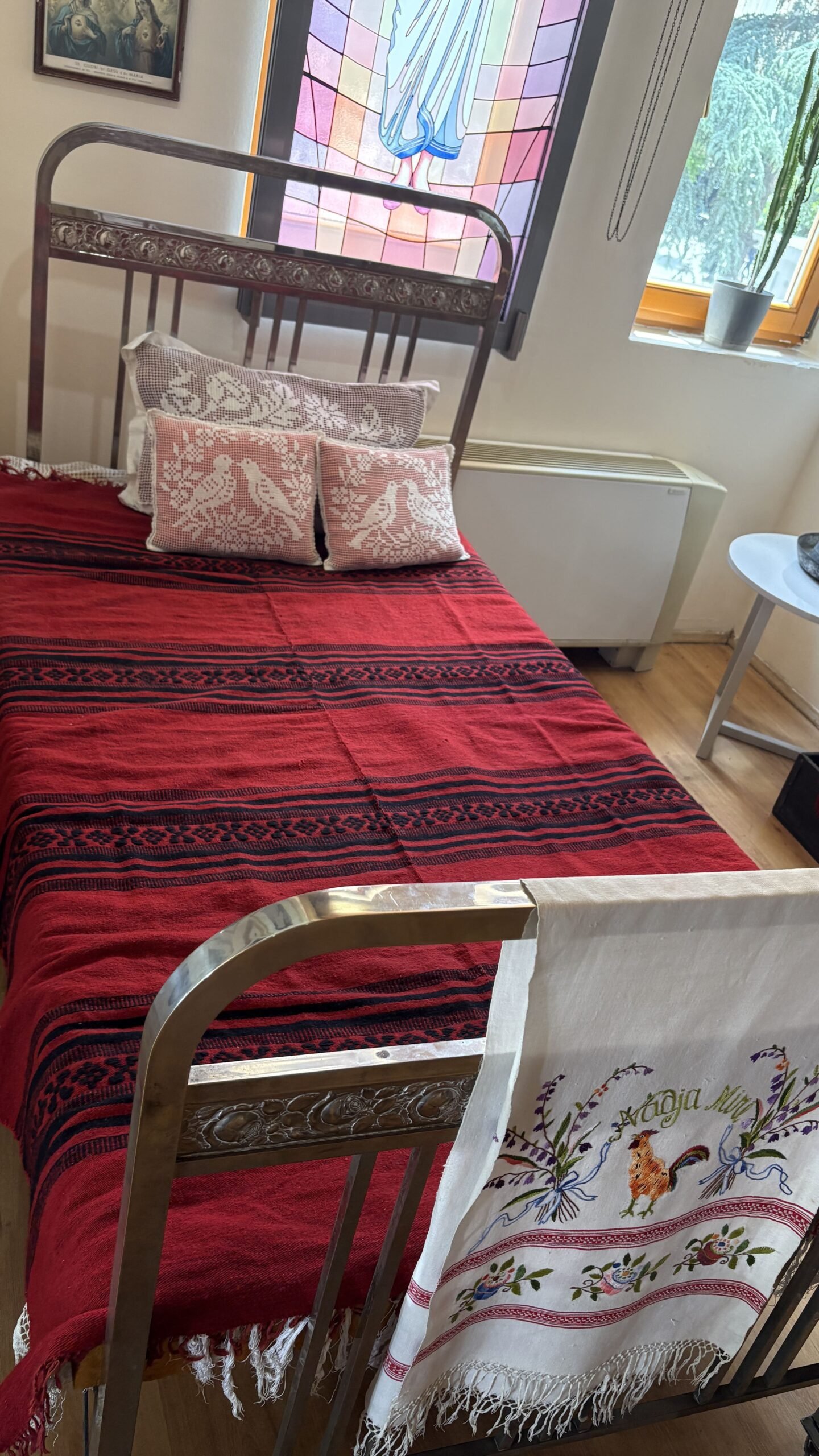
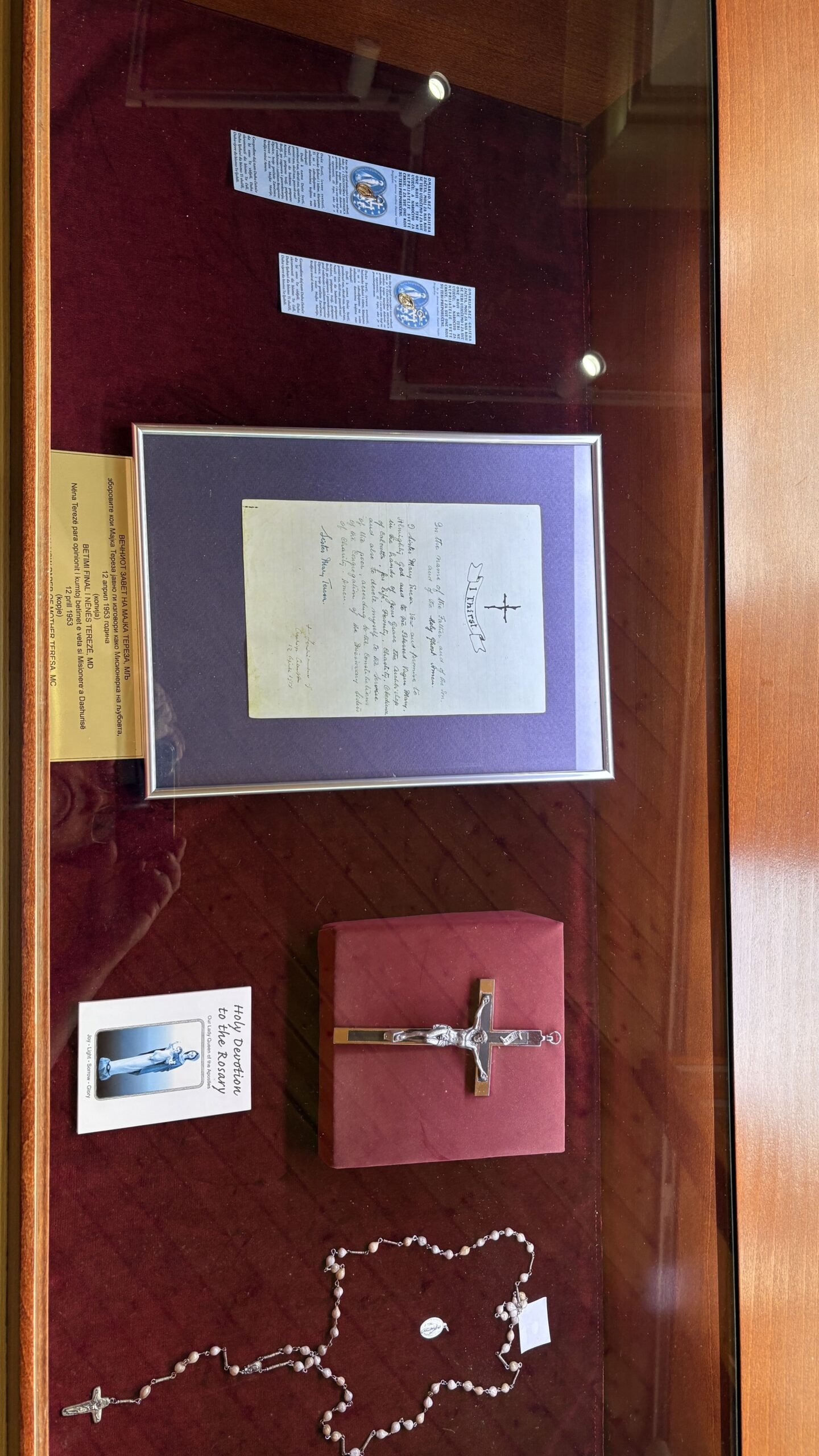
We walked to the Mother Teresa Memorial House on Macedonia Street. She was born here in 1910.It is calm, modern, and a good reset.
Shopping: We had some free time, so indulged in shopping clothes and souvenirs for an hour or so.
Evening: Vardar River Walk + Dinner
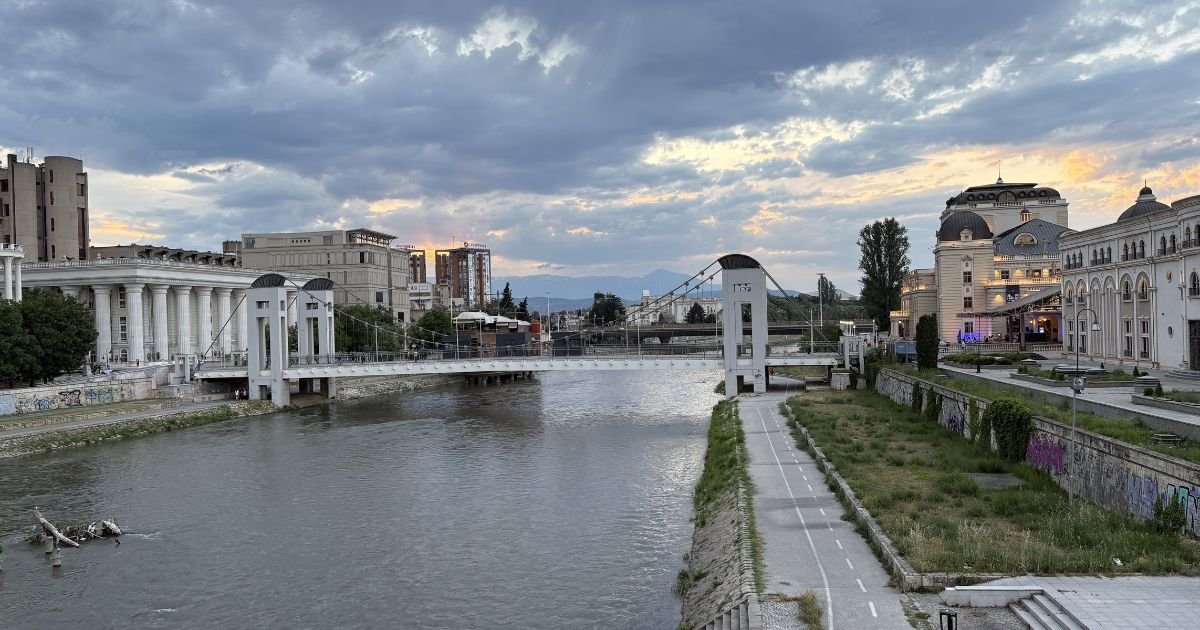
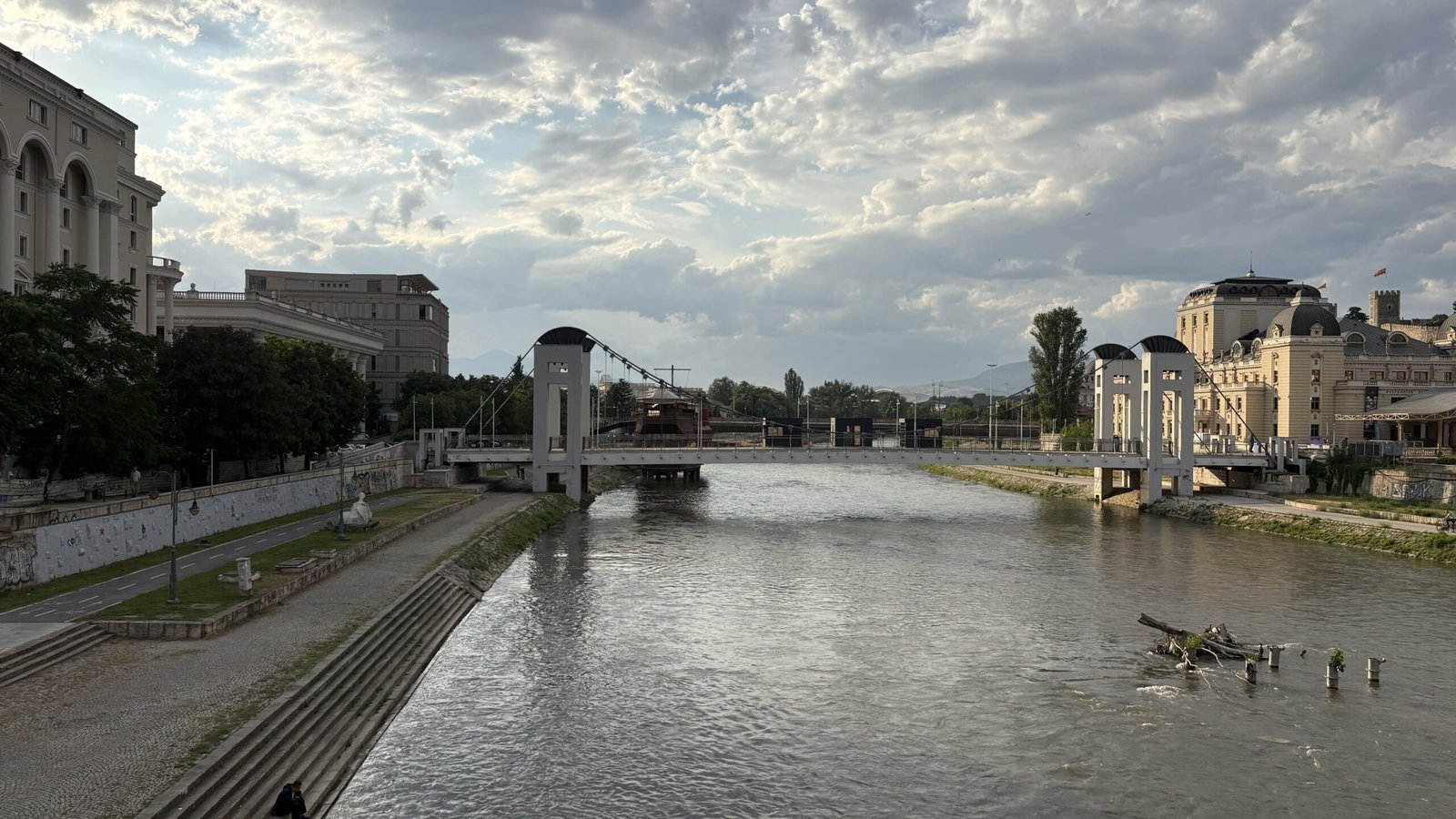
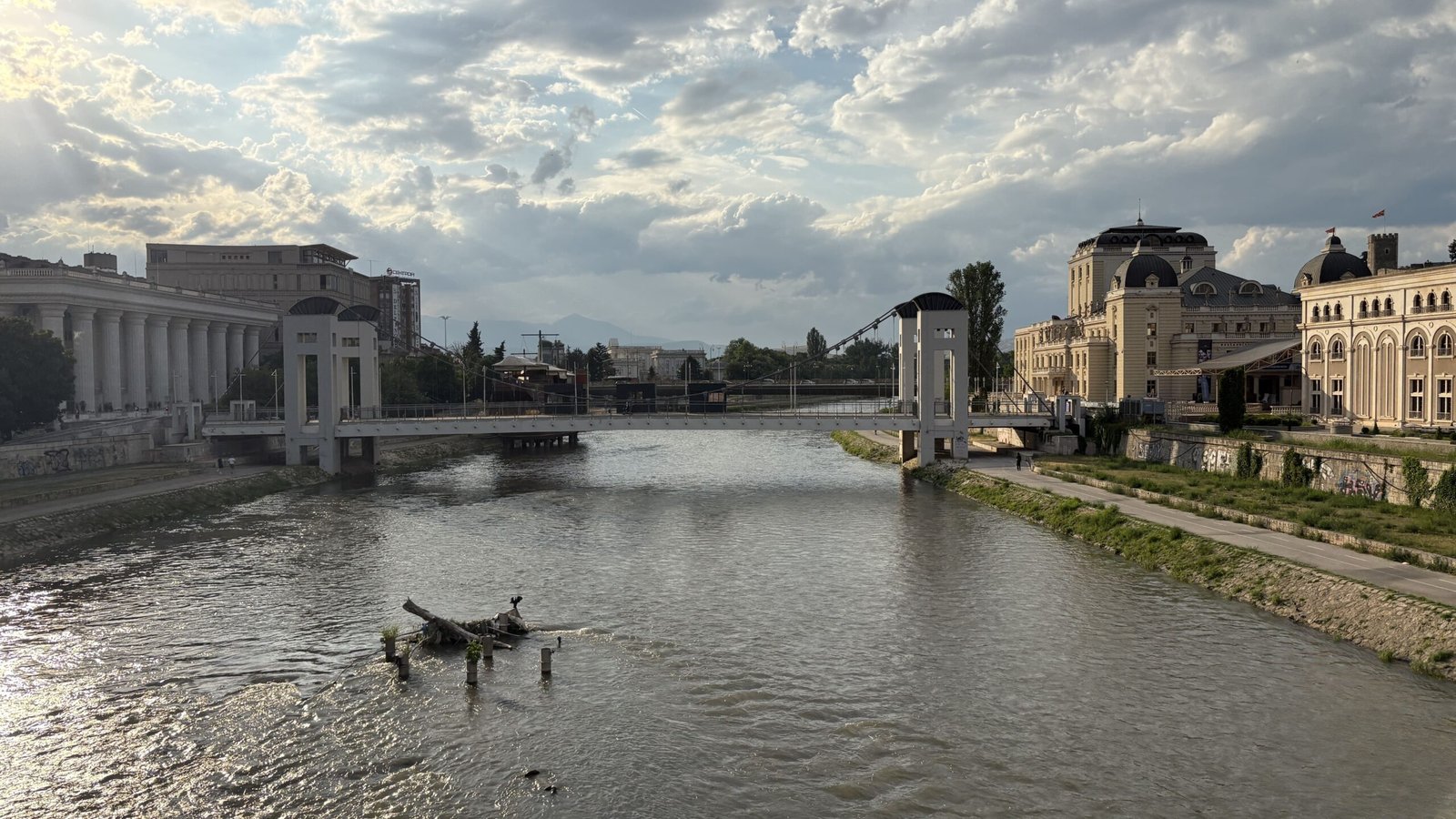
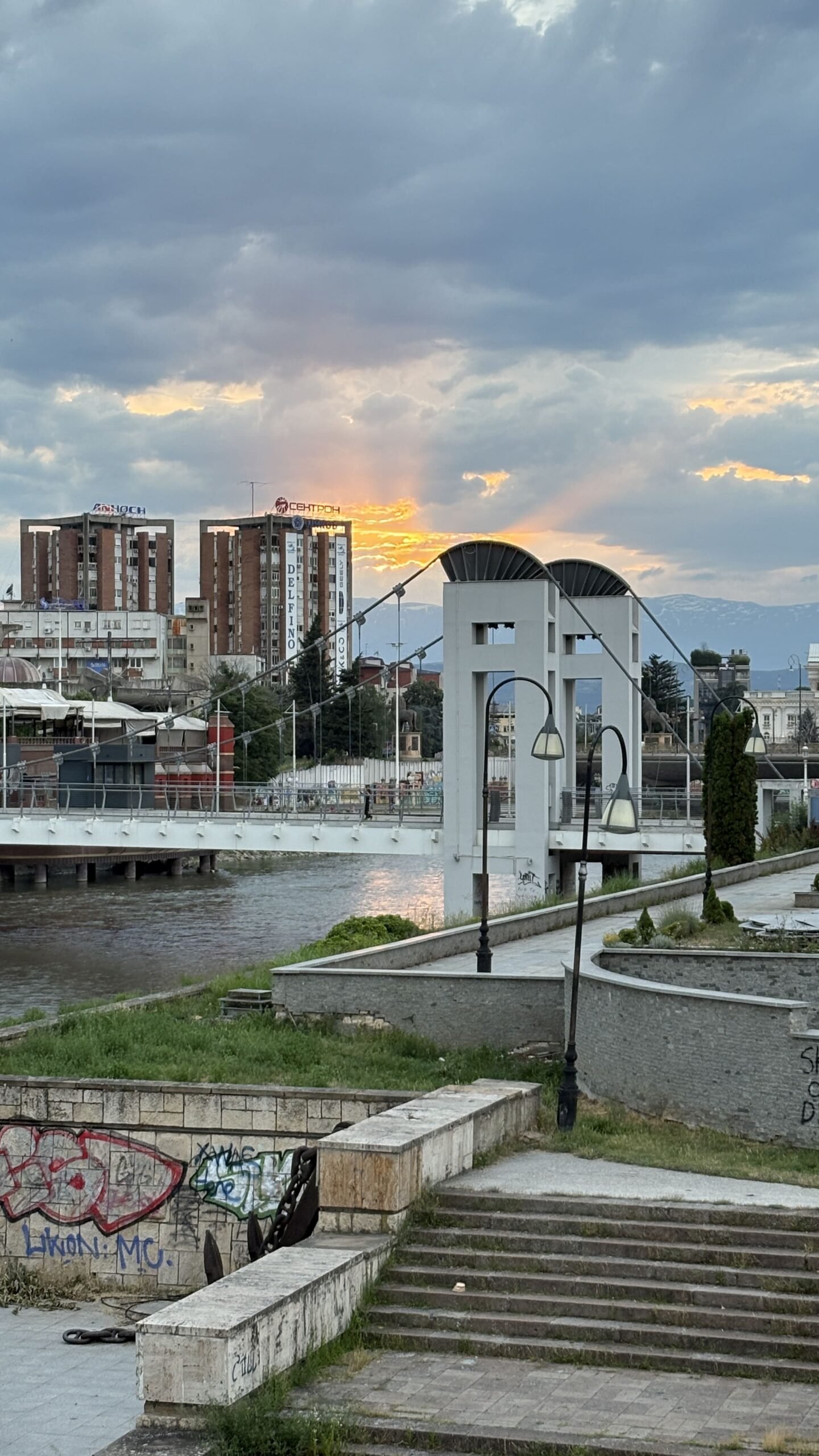
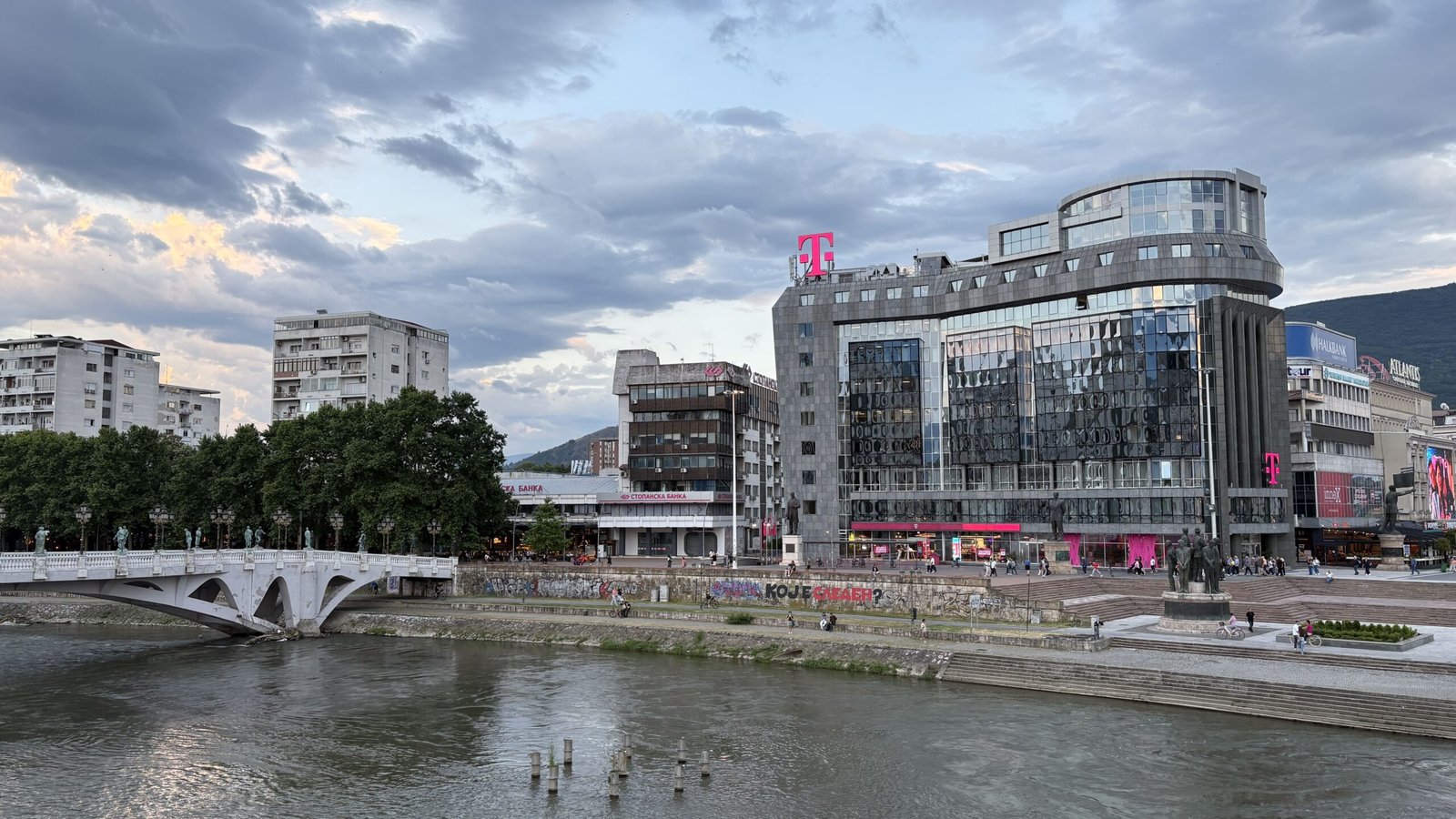
Walked along the river at sunset. The statues lit up. We grabbed dinner in Debar Maalo – this is where locals actually eat. We tried grilled trout with local beer. It was heavenly.
The takeway:
Skopje got 80% destroyed in 1963 earthquake, so the city basically rebuilt its identity twice. First with Yugoslav style, then with all the marble in 2014. It’s not “pretty” like Prague. It’s a city trying to figure out its story out loud.
And that makes it unforgettable.
Travel Tips:
Getting around: Everything in the city center is walkable. Taxi to Matka is ~€15-20.
Cash: Macedonian Denars are best. Euros work in tourist spots and shopping centers. Credit cards are accepted at many places.
Not to Miss: Sunset from Kale, coffee in the Bazaar, Lights in the Square at night, Kebaps and Rakia.
Language: English is popular with young people and at tourist spots.
Best Time to Visit: April – June, September – October.
14 thoughts on “Skopje in 2 Days: A City That Argues With Itself”
Beautiful place. Not a regular tourist spot. Nicely described.
Thank you Kishore for your lovely remarks.
Perfectly described each every corner of SKOPJE capital of North Macedonia ! What a beautiful city !
Number of Marble statues!
Enjoyed food a lot ! Must visit city !
Thanks a lot for your review.We surely had a great time together.
Thanks a lot for your review.We surely had a great time together.
A detailed vivid description . Felt almost like we are travelling with you. A very historical place.
Excellent writeup
Thank you very much for your lovely feedback
Skopje shows the effect of multifaceted history. You have beautifully described the mixed civilisation and culture of skopje. Marble statues all over are just wonderful.
Thank you Sir for your nice review and appreciation.
The way you narrate the tour we can visualize it sitting at home. You walking across the stone bridge, with Skopje n the old bazar on each side… the mesmerising views from atop the Kale fortress…
the birth place (Mother Teresa memorial house) of mother Teresa… so wonderful trip.
Keep enjoying n writing👍👍
Thanks a lot for your kind and encouraging comments.
All pics are very very beautiful and narration of every spot is so lively that I feel as if I visited .
Thanks a lot Uttam for your kind reviews
You took me on a beautiful journey. Thanks for such a detailed description . Makes me put it on my bucket list for sure.